Choosing between a treadmill and an elliptical trainer for home fitness depends on individual fitness goals, physical needs, and preferences. Treadmills are ideal for replicating natural running and walking, offering high calorie burn through speed and incline, making them suitable for performance-focused individuals and race preparation. Elliptical trainers provide a low-impact, full-body workout, making them excellent for those with joint sensitivities or during injury recovery, engaging both upper and lower body muscles.
What are Elliptical Trainers and Treadmills, and Why Consider Them?
Elliptical trainers and treadmills are fundamental cardiovascular exercise machines found in most gyms and homes. Understanding their core functions and advantages is crucial for selecting the ideal machine for your workout regimen.
An elliptical trainer, also known as a cross-trainer, offers a low-impact workout by simulating walking, running, and stair climbing. Users move foot pedals in a smooth, gliding, elliptical motion while engaging moving handlebars for an integrated upper-body workout. This design keeps feet in contact with the pedals, significantly reducing stress on joints. Ellipticals are known for delivering a full-body workout, targeting major muscle groups in both the upper and lower body while being gentle on the knees, hips, and ankles. For see our home fitness recommendations on this site.
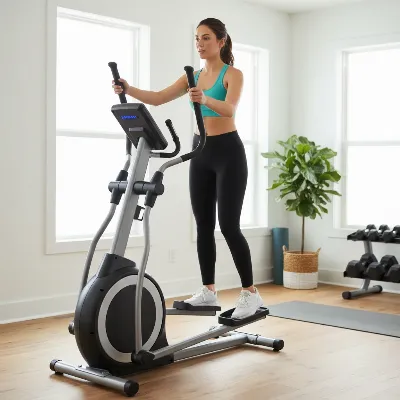 A person exercising on a modern elliptical trainer in a home gym, showing full-body engagement with smooth gliding motion
Conversely, a treadmill provides a traditional cardio workout with a moving belt for walking, jogging, or running in place. Treadmills primarily engage the lower body, mimicking outdoor running and walking, which is ideal for improving running form, speed, and endurance. The movement on a treadmill is high-impact, as feet repeatedly strike the belt, which can contribute to bone density but also poses a higher risk of joint stress for some individuals. Both machines boost cardiovascular fitness, aid in weight loss by burning calories, and increase stamina, but their mechanical differences activate the body in distinct ways.
Types of Elliptical Trainers and Treadmills
Fitness equipment has evolved to offer various types of elliptical trainers and treadmills, each with specific advantages. Knowing these variations helps in selecting a machine that aligns with your space and workout preferences.
Elliptical trainers typically feature three main drive systems, named for their flywheel location:
- Front-Drive Ellipticals have the flywheel at the front, often providing a steeper, stair-climbing motion. These models can feel bulkier but are generally more affordable and offer an effective workout.
- Rear-Drive Ellipticals place the flywheel at the back, offering a flatter, more natural stride that mimics running or walking. They tend to be smoother, quieter, and more stable, but can be more expensive and require more space.
- Center-Drive Ellipticals position the flywheel in the middle, with pedals on either side. This design often results in a more compact footprint and a balanced, ergonomic motion.
Additionally, recumbent ellipticals allow users to sit while exercising, providing an ultra-low-impact workout excellent for rehabilitation or those with significant mobility issues.
Treadmills also offer several distinct categories:
- Motorized Treadmills are the most common, featuring an electric motor that powers the belt. They allow precise control over speed and incline, offering customizable workouts from gentle walks to intense sprints and hill climbs.
- Manual Treadmills rely on user effort to move the belt. These are typically non-motorized, more compact, and often more affordable. They provide a challenging workout as you are entirely responsible for momentum, but may lack advanced features and smooth operation.
- Curved Treadmills are specialized manual treadmills with a concave, slatted belt. Their unique shape encourages a more natural running form and can reduce impact while engaging more muscle groups due to their self-powered nature. They are often found in commercial or high-performance home gyms.
Key Factors When Choosing an Elliptical Trainer or Treadmill
Selecting the right cardio machine requires careful consideration of several factors beyond brand or price. Your body’s needs, fitness aspirations, and available space all play crucial roles.
Joint Impact and Health
|
Our Picks for the Best Elliptical Trainer in 2026
As an Amazon Associate I earn from qualifying purchases.
|
||
| Num | Product | Action |
|---|---|---|
| 1 | Elliptical Exercise Machine for Apartments and Homes,8 Levels of Magnetic Resistance,15.5-inch Stride Elliptical Machine, and Supports Users up to 400 pounds Elliptical Training Machines; |

|
| 2 | Cubii JR1, Under Desk Elliptical, Under Desk Bike Pedal Exerciser, Seated Elliptical, Work from Home Fitness, Mini Elliptical Machines for Home Use, Cubii Exerciser for Seniors, Desk Exercise |
|
| 3 | Under Desk Elliptical Machine, Electric Elliptical Leg Exerciser for Seniors Fully Assembled, Quiet & Portable Electric Seated Pedal Exerciser with Remote Control & 12 Adjustable Speeds |
|
| 4 | Under Desk Elliptical Machine, Electric Ellipse Leg Exerciser for Senior, Quiet and Compact Electric Seated Pedal Exerciser for Home with Display Monitor, Remote Control and 12 Adjustable Speeds |
|
| 5 | Under Desk Elliptical Machine, Electric Seated Pedal Exerciser, Min Leg Exerciser with Remoter, 12 Level Speeds, Forward & Reverse Direction, Manual & Auto Mode for Home Office |
|
| 6 | Under Desk Elliptical Machine, Electric Elliptical as Seen on TV for Seniors Adults with 15 Adjustable Speed, Quiet & Portable Electric Seated Pedal Exerciser with Remote Control & 5 Auto Mode |
|
| 7 | JLL Smart Mini Elliptical – Low-Impact Cardio, Quiet Magnetic Resistance (8 Levels), Compact for Home or Office, LCD Display, Bluetooth SunnyFit App Compatible |
|
| 8 | Under Desk Elliptical Machine, Upgraded 6 Adjustable Resistance &15 Speeds Electric Elliptical Leg Exerciser while Sitting for Seniors with Forward & Reverse Direction, Touch Screen and Remote Control |
|
| 9 | Under Desk Elliptical Machine, Electric Elliptical Leg Exerciser While Sitting for Seniors with Upgraded 15 Speeds & 12 Auto Mode, Forward & Reverse Direction, Quiet Portable Seated Pedal Exerciser |
|
| 10 | Sunny Health & Fitness Cardio Climber Stepping Elliptical Exercise Machine for Home with 8 Levels of Magnetic Resistance, Performance Monitor, Full Body Workout |
|
One of the most significant distinctions is their impact on your joints. Treadmills, especially when running, involve repeated foot strikes that generate significant impact force on your knees, ankles, and hips. While this high-impact nature can contribute to improved bone density, it also carries a higher risk of overuse injuries for some individuals, particularly those with pre-existing joint conditions or new to high-intensity exercise.
Elliptical trainers are known for their low-impact design. Your feet remain continuously in contact with the pedals, eliminating the pounding associated with running. This gliding motion drastically reduces stress on joints, making ellipticals an excellent choice for individuals recovering from injuries, those with joint pain, older adults, or anyone prioritizing long-term joint health.
Muscle Engagement
The muscle groups targeted also differ considerably. A treadmill primarily strengthens the lower body, including the quadriceps, hamstrings, glutes, and calves. Incline training on a treadmill further engages these muscles and can activate core stabilizers.
Ellipticals, with synchronized arm handles, offer a more comprehensive, full-body workout. They engage lower body muscles similar to a treadmill but also recruit the upper body (biceps, triceps, shoulders, back) and core muscles as you push and pull the handles. This balanced muscle activation provides efficient total-body exercise without added joint stress.
Calorie Burn and Weight Loss
Both ellipticals and treadmills are highly effective for burning calories and supporting weight loss when combined with a consistent calorie deficit. High-intensity interval training (HIIT) on a treadmill, especially with incline, can lead to a higher short-term calorie burn per minute due to intense effort and impact.
However, the low-impact nature of an elliptical often allows for longer, more sustained workout sessions, which can accumulate to similar or even higher total calorie expenditures over time. Ultimately, total calories burned depends more on workout intensity and duration, as well as individual factors like weight and metabolism, rather than the machine itself. Consistency in using either machine is the most critical factor for weight loss.
Workout Versatility and Customization
Treadmills generally offer greater versatility in workout programming. Users can precisely control speed and incline, allowing for a vast array of training options, from leisurely walks to challenging hill climbs and high-speed sprints. This makes treadmills particularly suitable for runners training for specific races or those looking to improve running-specific metrics.
Ellipticals provide customization through adjustable resistance levels and, on some advanced models, incline settings. Many ellipticals also allow for pedaling in reverse, which engages different muscle groups. While offering robust cardio benefits, their movement pattern is more guided and less varied than a treadmill’s.
Stride Length (Elliptical)
For elliptical users, stride length is a crucial factor for comfort and effectiveness. A natural stride length, typically between 18 to 20 inches for most adults, ensures comfortable and biomechanically sound movement. Too short or too long a stride can feel awkward and may lead to discomfort or reduced workout efficiency. Many modern ellipticals offer adjustable stride lengths to accommodate various user heights.
Resistance Levels
Both machines benefit from adjustable resistance levels to cater to all fitness levels and workout intensities. On a treadmill, resistance is controlled by speed and incline. On an elliptical, magnetic or electromagnetic resistance systems allow you to increase or decrease the effort required to move the pedals and handlebars. A wider range of resistance levels provides more options for progression and challenge.
Flywheel Weight (Elliptical)
The weight of an elliptical’s flywheel significantly impacts the smoothness and stability of its operation. A heavier flywheel (typically 15-25 pounds or more) provides a smoother, more fluid motion, reducing jerkiness and strain on your joints. It also contributes to the machine’s overall stability and durability, enhancing the quality of your workout experience.
Display and Programs
Modern treadmills and ellipticals come equipped with sophisticated displays that track essential metrics like time, distance, speed, calories burned, and heart rate. Many also offer a variety of pre-set workout programs designed to challenge you with different intervals, inclines, or resistance changes, providing motivation and structure to your routine. Look for clear, easy-to-read displays and intuitive controls.
Connectivity
Connectivity is a standard feature for most high-quality fitness equipment. Bluetooth capabilities allow you to sync your machine with fitness apps, heart rate monitors, and smart devices. This integration enables tracking progress, accessing guided workouts, competing with others, and streaming entertainment, making your workouts more engaging and personalized.
Durability and Quality
Investing in a durable machine is paramount for long-term use. Look for robust construction, high-quality materials, and a stable frame. The weight capacity of the machine can also be an indicator of its build quality. A well-built machine will withstand regular use, require less frequent maintenance, and provide a safer workout experience.
Size and Space
Consider the footprint of the machine in your home gym. Treadmills can be quite large, though many offer folding designs for easier storage. Ellipticals also require significant space, and their elongated shape can be a challenge in smaller rooms. Measure your available space carefully, including ceiling height, especially if the machine has a steep incline or if you are tall.
Buying Guide: Making the Right Choice
Choosing between an elliptical trainer and a treadmill is a significant decision for your home gym. A thoughtful approach considering your budget, goals, and personal preferences will guide you to the perfect fitness partner.
Determine Your Budget
Fitness equipment varies widely in price. Budget-friendly options, typically ranging from $150 to $500, might offer basic features and lighter construction. Mid-range models, from $500 to $1,500, often provide enhanced durability, more programs, and improved comfort. High-end machines, costing upwards of $1,500 to several thousands, boast advanced technology, superior build quality, extensive connectivity, and premium features designed for serious fitness enthusiasts. Define your comfortable spending limit and understand what features are realistic within that range.
Assess Your Fitness Goals and Needs
Your ultimate fitness goals should be the primary driver of your decision. Are you training for a marathon, aiming for intense calorie burn, or seeking to improve overall running performance? A treadmill might be more aligned with these specific, performance-based objectives. Conversely, if your focus is on low-impact cardiovascular health, full-body toning, injury recovery, or simply a consistent, comfortable workout, an elliptical trainer could be more suitable. Consider your current fitness level, any joint concerns, and whether you desire upper-body engagement.
Read Reviews and Comparisons
Before making a purchase, dedicate time to researching user reviews and expert comparisons. Platforms like ReviewGraphs.com provide valuable insights into specific models, highlighting their strengths, weaknesses, and real-world performance. Pay attention to feedback regarding durability, ease of use, noise levels, and customer support. This collective wisdom can reveal aspects you might not have considered.
Try Before You Buy (If Possible)
If feasible, visit a fitness equipment store to physically test out various treadmills and elliptical trainers. Walk, jog, or glide on different models to assess comfort, machine stability, and the natural feel of the movement. Pay attention to the stride length on ellipticals and the cushioning system on treadmills. This hands-on experience can be invaluable in confirming your choice.
Warranty and Support
A comprehensive warranty signals a manufacturer’s confidence in their product and protects your investment. Look for warranties that cover the frame, motor (for treadmills), parts, and labor for a reasonable duration. Additionally, research the brand’s customer service and technical support reputation. Reliable post-purchase support ensures that any issues you encounter can be resolved efficiently, maximizing the longevity and enjoyment of your machine.
Tips for Effective Use and Maintenance
Maximizing the benefits of your elliptical trainer or treadmill, while ensuring its longevity, requires more than just regular use. Adopting proper techniques and adhering to a consistent maintenance schedule are crucial for a safe, effective, and durable fitness experience.
Proper Warm-up and Cool-down
Always begin your workout with a 5-10 minute warm-up at a low intensity. This prepares your muscles and cardiovascular system for exertion, reducing the risk of injury. Similarly, conclude each session with a 5-10 minute cool-down, gradually decreasing intensity. This helps to lower your heart rate, prevent blood pooling, and promote flexibility, aiding in recovery. Skipping these vital phases can lead to muscle soreness or strain.
Correct Posture and Technique
Maintaining proper form is essential for both effectiveness and injury prevention. On a treadmill, maintain an upright posture, keep your head up, shoulders back, and avoid gripping the handlebars too tightly. Allow your arms to swing naturally. For an elliptical, ensure your back is straight, engage your core, and distribute your weight evenly between your feet and the moving handlebars. Avoid leaning heavily on the handles, as this can reduce lower body engagement and lead to back strain.
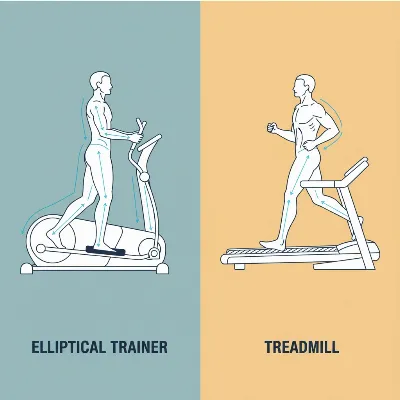 A split image showing correct posture on an elliptical trainer and a treadmill, highlighting proper body alignment and form
Regular Cleaning and Maintenance
Routine cleaning and maintenance are key to extending the life of your machine. After each workout, wipe down the console, handlebars, and pedals/belt with a damp cloth to remove sweat and grime. Periodically check for loose bolts or worn parts. For treadmills, lubricate the belt according to the manufacturer’s instructions, typically every few months, and ensure the belt is properly tensioned and centered. For ellipticals, inspect pivot points and ensure they are free of debris. Regular attention prevents minor issues from escalating into costly repairs.
Component Replacement
Over time, certain components may wear out and require replacement to ensure safety and optimal performance. For treadmills, the running belt can wear down, leading to slipping or decreased cushioning. Motors may also require servicing if they start to make unusual noises or lose power. On ellipticals, pedal bearings, bushings, or resistance mechanisms might need attention. Consult your machine’s manual for recommended inspection intervals and guidance on sourcing replacement parts. Timely replacement prevents further damage and ensures a smooth, safe workout experience.
Conclusion
The decision between a treadmill and an elliptical trainer ultimately hinges on a thoughtful evaluation of your individual fitness goals, physical needs, and personal preferences. Treadmills excel in mimicking natural running and walking, offering unparalleled calorie-burning potential through speed and incline variations, making them ideal for performance-focused individuals and race preparation. However, their high-impact nature may not suit everyone.
Elliptical trainers, with their low-impact, full-body workout, provide a joint-friendly alternative, perfect for those with sensitivities or in injury recovery. They offer balanced muscle engagement and sustainable cardio sessions. Both machines are powerful allies in achieving cardiovascular fitness and weight loss, yet the “best” choice is truly subjective. Consider your budget, space, and how each machine makes you feel during a workout. By prioritizing consistency and alignment with your unique journey, you can confidently select the cardio equipment that will empower you to conquer your fitness goals.
Frequently Asked Questions
Which is better for weight loss—an elliptical or a treadmill?
Both ellipticals and treadmills are highly effective for weight loss as they help burn calories, which is crucial for creating a calorie deficit. While high-intensity treadmill workouts might offer a slightly higher short-term calorie burn, ellipticals allow for longer, sustained sessions due to their low impact. The best machine for weight loss is ultimately the one you will use consistently and intensely over time.
Is the elliptical better than a treadmill?
Neither machine is inherently “better” than the other; instead, they cater to different needs. An elliptical trainer is often considered better for individuals with joint pain or those recovering from injuries due to its low-impact, full-body workout. Treadmills are often preferred by runners or those seeking to improve bone density and replicate outdoor running conditions.
Is the elliptical harder than the treadmill?
Both machines can offer challenging workouts depending on the intensity settings. Treadmills allow for increased difficulty through speed and incline adjustments, which can be very demanding. Ellipticals can be made harder by increasing resistance and stride speed, engaging more muscles for a strenuous full-body workout. The perceived difficulty often depends on your fitness level and chosen workout parameters.
Is the elliptical good for belly fat?
While you cannot specifically target belly fat with any single exercise, using an elliptical trainer is excellent for burning overall body fat, including visceral fat around the abdomen. By consistently burning calories and maintaining a healthy diet, an elliptical can contribute significantly to general weight and fat loss throughout your body.
Choose Between an Elliptical Trainer and a Treadmill
Selecting the right cardio machine for your home gym involves considering your budget, fitness goals, and personal preferences to ensure you pick the best equipment for your needs.
Define your comfortable spending limit, as fitness equipment prices vary widely. Budget-friendly options range from $150 to $500, mid-range models from $500 to $1,500, and high-end machines cost upwards of $1,500. Understanding your budget helps align features with realistic expectations.
Identify your primary fitness objectives. If you're training for a marathon or aiming for intense calorie burn, a treadmill might be better. For low-impact cardiovascular health, full-body toning, or injury recovery, an elliptical trainer could be more suitable. Consider your current fitness level and any joint concerns.
Research user reviews and expert comparisons on platforms like ReviewGraphs.com. Pay attention to feedback on durability, ease of use, noise levels, and customer support for specific models. This collective wisdom can reveal important aspects you might not have considered.
Visit a fitness equipment store to physically test various treadmills and elliptical trainers. Walk, jog, or glide on different models to assess comfort, machine stability, and the natural feel of the movement. This hands-on experience is invaluable for confirming your choice.
Look for a comprehensive warranty that covers the frame, motor (for treadmills), parts, and labor for a reasonable duration. Research the brand's customer service and technical support reputation. Reliable post-purchase support ensures efficient resolution of any issues, maximizing the longevity of your machine.

After reading up on the benefits, I decided on a treadmill for my home gym, and I’m so glad I did. I love being able to adjust the speed and incline to match my outdoor runs, and it’s been invaluable for my race preparation. It feels very natural and sturdy, even during faster sprints. Definitely worth the investment if you’re serious about running.
I went with a treadmill because I’m training for a 10k and needed something to replicate outdoor running. The incline feature is fantastic for simulating hills, and I’ve noticed a real improvement in my stamina. My only minor complaint is that it’s a bit noisy, but I usually just crank up my headphones. Overall, a solid investment for performance-focused individuals.
I was really torn between the two, but ended up getting an elliptical. While I like the full-body aspect, I sometimes feel like I’m not getting as intense a cardio workout as I would on a treadmill. It’s great for recovery days or when my joints are feeling a bit sensitive, but for really pushing myself, I sometimes wish I’d gone with the treadmill for that higher calorie burn. It’s good, just not always what I need.
I’ve been using my new elliptical for about a month now, and it’s been a game-changer for my knees. I used to get so much pain from running on the treadmill, but the low-impact motion of the elliptical is perfect. It really does give a full-body workout too, which I appreciate. Definitely recommend it for anyone with joint issues.