Are you striving for an effective, low-impact workout that engages your entire body? Cross trainer ellipticals stand out as a premier choice, offering a dynamic way to boost cardiovascular health, burn calories, and build endurance without putting undue stress on your joints. These versatile machines mimic natural walking, running, and stair-climbing motions, providing a fluid exercise experience that is both challenging and gentle. This comprehensive guide will explore what makes ellipticals so beneficial, delve into their different types, highlight crucial buying factors, and showcase the top 5 models recommended for 2026, ensuring you make an informed decision for your home gym.
What is an Elliptical Trainer and Why Should You Consider One?
An elliptical trainer, often simply called an elliptical or cross trainer, is a stationary exercise machine that allows your feet to glide in an elliptical path while simultaneously engaging your arms with moving handlebars. Unlike treadmills, your feet never leave the pedals, which significantly reduces impact on your joints. This makes it a fantastic option for individuals seeking a rigorous workout with minimal risk of injury.
The benefits of incorporating an elliptical into your fitness routine are extensive. Firstly, its low-impact nature protects your knees, hips, and ankles from the constant pounding associated with running, making it ideal for injury recovery, prevention, or for those with joint sensitivities. Secondly, ellipticals provide a true full-body workout. While your lower body (glutes, hamstrings, quadriceps, calves) drives the pedaling motion, the synchronized pushing and pulling of the handlebars actively engages your upper body, including your arms, chest, shoulders, and core. This simultaneous muscle engagement leads to higher calorie expenditure and improved overall strength.
Furthermore, regular elliptical training is excellent for cardiovascular health, strengthening your heart and lungs, and significantly improving stamina and endurance over time. It’s an effective tool for calorie burning and weight loss, with a typical 30-minute session burning anywhere from 270 to 400 calories depending on intensity and body weight. You can also target specific muscle groups more intensely by adjusting the incline, resistance, or even pedaling in reverse.
When compared to other popular cardio machines, ellipticals hold their own. While treadmills offer high-intensity running, they come with higher impact risks. Ellipticals deliver similar cardio results with greatly reduced joint stress. Against stationary bikes, which primarily focus on the lower body, ellipticals offer a more comprehensive calorie burn and muscle engagement due to their full-body involvement.
Popular Types of Elliptical Trainers
Elliptical trainers come in several configurations, primarily distinguished by the placement of their flywheel. Each type offers a slightly different feel and user experience.
- Front-Drive Elliptical Trainers: These machines have the flywheel located at the front of the unit. They often feature a more compact design, making them suitable for smaller spaces. The motion tends to be slightly steeper, sometimes feeling more like stair climbing. This design can provide a good challenge for the quadriceps.
- Rear-Drive Elliptical Trainers: With the flywheel positioned at the back, rear-drive ellipticals are generally known for a smoother, more natural stride that closely mimics running. They often provide excellent stability and are preferred by many for their ergonomic feel. These machines can be longer than front-drive models.
- Center-Drive Elliptical Trainers: In this design, the flywheel is located on both sides, closer to the user’s center. Center-drive ellipticals are prized for their compact footprint, exceptional stability, and a very balanced, natural motion. They tend to be among the quietest options.
Understanding these differences can help you narrow down which type might best suit your preferences and available space.
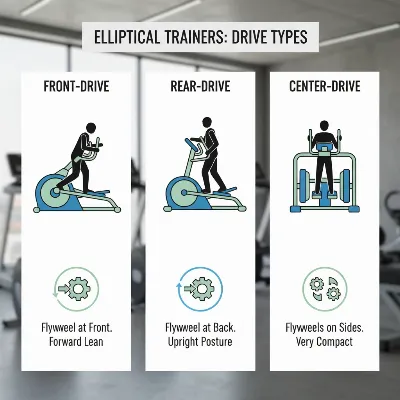 Different types of elliptical cross trainers showing front, rear, and center drive mechanisms
Important Factors to Consider When Buying an Elliptical Trainer
Choosing the right elliptical trainer requires careful consideration of several key factors to ensure it meets your fitness goals, comfort needs, and budget.
Stride Length
|
Our Picks for the Best Elliptical Trainer in 2026
As an Amazon Associate I earn from qualifying purchases.
|
||
| Num | Product | Action |
|---|---|---|
| 1 | Under Desk Elliptical Machine, Electric Elliptical Leg Exerciser for Seniors Fully Assembled, Quiet & Portable Electric Seated Pedal Exerciser with Remote Control & 12 Adjustable Speeds |

|
| 2 | Under Desk Elliptical Machine, Electric Ellipse Leg Exerciser for Senior, Quiet and Compact Electric Seated Pedal Exerciser for Home with Display Monitor, Remote Control and 12 Adjustable Speeds |
|
| 3 | Under Desk Elliptical Machine, Electric Elliptical Leg Exerciser While Sitting for Seniors with Upgraded 15 Speeds & 12 Auto Mode, Forward & Reverse Direction, Quiet Portable Seated Pedal Exerciser |
|
| 4 | Under Desk Elliptical Machine, Upgraded 6 Adjustable Resistance &15 Speeds Electric Elliptical Leg Exerciser while Sitting for Seniors with Forward & Reverse Direction, Touch Screen and Remote Control |
|
| 5 | Elliptical Exercise Machine for Apartments and Homes,8 Levels of Magnetic Resistance,15.5-inch Stride Elliptical Machine, and Supports Users up to 400 pounds Elliptical Training Machines; |
|
| 6 | Under Desk Elliptical Machine, Electric Seated Pedal Exerciser, Min Leg Exerciser with Remoter, 12 Level Speeds, Forward & Reverse Direction, Manual & Auto Mode for Home Office |
|
| 7 | JLL Smart Mini Elliptical – Low-Impact Cardio, Quiet Magnetic Resistance (8 Levels), Compact for Home or Office, LCD Display, Bluetooth SunnyFit App Compatible |
|
| 8 | Cubii JR1, Under Desk Elliptical, Under Desk Bike Pedal Exerciser, Seated Elliptical, Work from Home Fitness, Mini Elliptical Machines for Home Use, Cubii Exerciser for Seniors, Desk Exercise |
|
| 9 | Under Desk Elliptical Machine, Electric Elliptical as Seen on TV for Seniors Adults with 15 Adjustable Speed, Quiet & Portable Electric Seated Pedal Exerciser with Remote Control & 5 Auto Mode |
|
| 10 | Sunny Health & Fitness Cardio Climber Stepping Elliptical Exercise Machine for Home with 8 Levels of Magnetic Resistance, Performance Monitor, Full Body Workout |
|
The stride length is the distance the pedals move forward and back, and it’s arguably the most critical factor for comfort and effectiveness. A stride length that is too short can feel unnatural and choppy, while one that’s too long can cause overextension and discomfort. Most home ellipticals offer a stride length between 18 and 22 inches. Taller users (over 6 feet) should aim for a 20-22 inch stride to ensure a natural and comfortable motion.
Resistance Levels
The number and type of resistance levels directly impact the versatility and intensity of your workouts. A machine with 10-20 or more resistance levels will allow you to progress as your fitness improves and accommodate multiple users with different fitness levels. Magnetic resistance systems are common and provide smooth, quiet operation, while some models combine magnetic with air resistance for a more dynamic feel.
Flywheel Weight
The flywheel’s weight plays a significant role in the smoothness and stability of the elliptical motion. A heavier flywheel typically provides a more fluid, consistent, and comfortable pedaling action, especially during higher intensity workouts. Look for ellipticals with a flywheel weighing at least 15-20 pounds (around 7-9 kg) for a superior experience, though many high-end models feature flywheels weighing 20 pounds or more.
Display and Workout Programs
A clear and informative display is essential for tracking your progress, showing data like speed, distance, exercise time, calories burned, and heart rate. Many modern ellipticals also come with pre-programmed workouts designed for specific goals, such as weight loss, performance development, or interval training, which can keep your routine engaging and motivating.
Connectivity
In today’s connected world, many ellipticals offer advanced connectivity features. Bluetooth capabilities allow you to sync with fitness apps (like iFIT or JRNY), track your workouts, and sometimes even mirror your phone or tablet screen to access guided classes, virtual scenic routes, or entertainment. Some brands, like Sole, offer their own free content platforms (Sole+).
Durability and Quality
An elliptical is an investment, so durability is paramount. Look for machines with a sturdy frame, preferably made of steel, and high-quality components that can withstand regular use. The maximum user weight capacity is a good indicator of overall build quality; choose a machine with a capacity at least 15-20 kg higher than your body weight for optimal longevity and stability.
Size and Space
Elliptical trainers can take up significant floor space, so measure your available area carefully before purchasing. Some models offer foldable designs, which can be an excellent space-saving solution for smaller homes or apartments. Also, consider the machine’s height, especially if you have low ceilings.
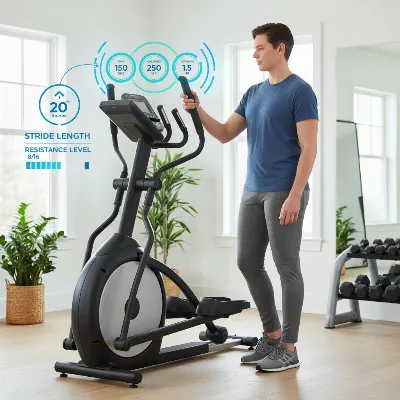 A person evaluating an elliptical machine, considering various buying factors like stride length and display
Top 5 Best Cross Trainer Ellipticals for Total Body in 2026
When it comes to achieving a comprehensive, low-impact total body workout, these five cross-trainer ellipticals stand out in 2026 for their performance, features, and value.
| Brand | Model | Key Features | Pros | Cons |
|---|---|---|---|---|
| Sole | E35 Elliptical | 20 levels resistance, 20-inch stride, 20lb flywheel, large display, apps | Excellent value, smooth & quiet, very durable, advanced console | Not foldable |
| NordicTrack | FS14i FreeStride Trainer | Up to 32-inch auto-adjustable stride, 10% incline/decline, iFIT | Highly versatile stride, immersive iFIT, premium comfort | Large footprint, high price point, iFIT subscription |
| BowFlex | Max Total 16 | Compact design, HIIT focused, air+magnetic resistance, large touchscreen | Space-saving, intense HIIT, engaging JRNY content, quiet operation | Shorter stride might not suit all users, JRNY subscription |
| ProForm | Carbon EL | 19-inch stride, 20 levels resistance, budget-friendly, user-friendly | Great value, durable for its price, comfortable oversized pedals | No touchscreen, iFIT requires own device, basic features |
| Sole | E25 Elliptical | 20 levels resistance, 20lb flywheel, 10 preset workouts, Bluetooth | Durable, smooth, budget-friendly for features, good for petite users | Less advanced console than E35, not foldable |
Here’s a closer look at these top performers:
1. Sole E35 Elliptical
The Sole E35 continues to be a top contender, consistently praised as an “overall best” and “most comfortable elliptical” for home use. It strikes an impressive balance between features, durability, and a smooth user experience. The E35 boasts 20 levels of magnetic resistance and a 20-pound flywheel, ensuring a fluid and quiet operation suitable for all fitness levels. Its 20-inch stride length accommodates most users comfortably, while a robust frame provides exceptional stability. The console is equipped with a large display, wireless charging, screen mirroring, and access to guided workouts via the Sole+ app, offering excellent value for a premium-feeling machine.
2. NordicTrack FS14i FreeStride Trainer
For those seeking ultimate versatility and an immersive workout experience, the NordicTrack FS14i FreeStride Trainer is a standout choice. This machine offers an incredible auto-adjustable stride length of up to 32 inches, allowing it to function as an elliptical, a stepper, or even a treadmill. Coupled with its 10% incline and decline capabilities, adjustable pedals, and tall workout arms, the FS14i delivers an exceptionally natural and varied total-body workout. Its seamless integration with iFIT provides access to a vast library of trainer-led global workouts and studio classes, making every session engaging. This is a premium machine designed for serious fitness enthusiasts.
3. BowFlex Max Total 16
If space is a concern but intensity is not, the BowFlex Max Total 16 is an excellent “vertical elliptical” that excels at delivering high-intensity interval training (HIIT) in a compact footprint. Part of the popular Max Trainer series, this model features a unique air and magnetic resistance system that provides a challenging workout while engaging your entire body. The Max Total 16 stands out with its large touchscreen display, offering access to the JRNY adaptive coaching platform, which provides personalized workouts, virtual courses, and entertainment options. Its compact design (around 46 inches long) makes it ideal for smaller rooms, and it’s recognized for its quiet operation.
4. ProForm Carbon EL Magnetic Elliptical
The ProForm Carbon EL is celebrated as a “best value” and “best budget” elliptical, proving that quality doesn’t always come with a hefty price tag. It’s an ideal choice for beginners or those setting up a home gym without breaking the bank. Despite its accessible price, the Carbon EL offers a sturdy build, a comfortable 19-inch stride length, and 20 levels of smooth magnetic resistance. It includes 10 preset workouts and oversized pedals for enhanced comfort. While it doesn’t have a built-in touchscreen, it features a tablet holder and is iFIT compatible (requiring your own device) for a connected workout experience.
5. Sole E25 Elliptical Cross Trainer
The Sole E25 Elliptical Cross Trainer is a highly durable and reliable option, often cited as a “most durable” and “good for petite users” elliptical. Similar to its E35 sibling but at a more affordable price point, the E25 offers a robust 20-pound flywheel and 20 levels of resistance for a smooth and consistent workout. It features a 20-inch stride, oversized foot pedals, and 10 preset workouts. Additional creature comforts include a cooling fan, water bottle holder, and Bluetooth speakers. For those prioritizing a solid, low-maintenance machine with core features and excellent build quality, the E25 is a fantastic choice.
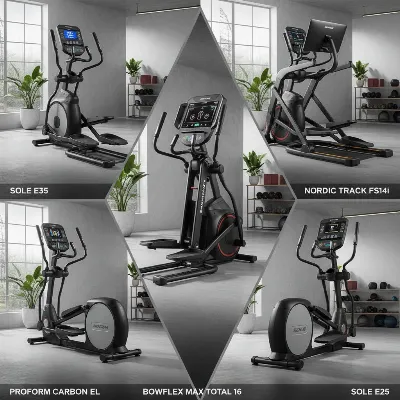 A collage of the top 5 elliptical trainer models mentioned, showing their distinct designs
Elliptical Trainer Buying Guide
Navigating the market for an elliptical trainer can be daunting, but a structured approach will help you pinpoint the perfect machine for your needs.
Determine Your Budget
Elliptical trainers span a wide price range. Entry-level models (under $800) offer basic features suitable for occasional use. Mid-range ellipticals ($800 – $1,500) typically provide more resistance levels, better build quality, and some smart features. High-end machines (over $1,500) boast superior durability, advanced technology (large touchscreens, integrated apps), and adjustable strides. Setting a realistic budget from the start will significantly narrow your options.
Assess Your Needs
Consider your fitness goals: Are you aiming for weight loss, endurance building, or injury rehabilitation? How frequently will the machine be used (daily, several times a week, occasionally), and by how many people? Also, be realistic about your available space. If you live in an apartment, a compact or foldable model might be essential. Your specific needs will dictate the features and size of the elliptical you should pursue.
Read Reviews and Comparisons
Leverage the experiences of other users and expert reviewers. Online reviews, comparison articles, and fitness forums can offer invaluable insights into a machine’s performance, durability, and user-friendliness. Pay attention to comments regarding stride comfort, noise levels, and customer service. This research phase can highlight potential issues or unexpected benefits that specifications alone might not reveal.
Try Before You Buy
Whenever possible, visit a showroom or a store to physically try out different elliptical models. The feel of the stride length, the smoothness of the motion, and the ergonomics of the handlebars can be highly subjective. Spending a few minutes on a machine will give you a much better sense of its comfort and whether its natural movement aligns with your body.
Warranty and Support
A robust warranty is a testament to a manufacturer’s confidence in their product. Look for separate warranties covering the frame (often lifetime), parts (3-5 years), and labor (1-2 years). Good customer support is also crucial for any potential issues, from assembly questions to technical troubleshooting. Understanding the warranty and support policies ensures your investment is protected.
Tips for Using and Maintaining Your Elliptical Trainer
Maximizing the effectiveness and longevity of your Elliptical Trainer involves more than just regular workouts; it also requires proper usage and consistent maintenance.
Proper Warm-up and Cool-down
Always begin your elliptical session with a 5-10 minute warm-up at a low intensity to prepare your muscles and cardiovascular system for exercise. This can include light pedaling and dynamic stretches. Similarly, conclude your workout with a 5-10 minute cool-down at a reduced pace, followed by static stretches. This helps prevent muscle soreness and aids recovery, reducing the risk of injury.
Correct Posture and Technique
Maintaining proper form is crucial for an effective and safe workout. Stand upright with your shoulders back and down, chest open, and engage your core muscles. Avoid leaning excessively on the handlebars; they are for balance and upper body engagement, not for supporting your weight. Keep your movements fluid and controlled, ensuring your knees are slightly bent and not locked. A consistent, smooth motion will optimize calorie burn and muscle activation.
> “The elliptical’s true power lies in its ability to engage your entire kinetic chain. Focusing on a balanced push and pull with your arms, synchronized with a smooth lower body stride, transforms a simple cardio session into a comprehensive total-body challenge.” – Dr. Emily R. Thorne, Sports Physiologist & Fitness Expert
Regular Cleaning and Maintenance
To keep your elliptical running smoothly and extend its lifespan, regular cleaning and maintenance are essential. Wipe down the console and handlebars after each use to remove sweat and grime. Periodically check all bolts and screws to ensure they are tight. Lubricate moving parts as recommended by the manufacturer, and keep the area around the machine clean to prevent dust and debris from affecting its mechanisms.
Component Replacement When Needed
Over time, certain components like pedals, belts, or bushings may show signs of wear and tear. Pay attention to any unusual noises, wobbling, or changes in the machine’s performance. Promptly replacing worn-out parts can prevent further damage to the elliptical and maintain its safety and efficiency. Refer to your user manual for guidance on identifying and replacing specific components.
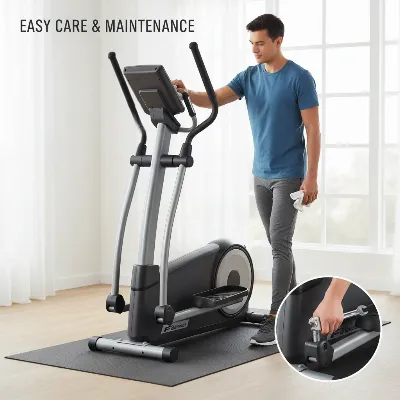 A person performing light maintenance on an elliptical trainer in a home gym setting
Conclusion
Choosing the right cross trainer elliptical is a decision that can profoundly impact your fitness journey, offering a powerful blend of low-impact cardio and total-body strengthening. With its ability to spare your joints while engaging a wide array of muscle groups, the elliptical stands as a highly effective tool for weight management, cardiovascular health, and building endurance. By carefully considering factors like stride length, resistance, flywheel weight, and connectivity, and exploring top models like the Sole E35, NordicTrack FS14i, BowFlex Max Total 16, ProForm Carbon EL, and Sole E25, you are well-equipped to find a machine that aligns perfectly with your lifestyle and fitness aspirations for 2026.
Ready to transform your home workouts and experience the myriad benefits of a premium cross trainer elliptical? Which feature excites you the most about starting your elliptical journey?
Frequently Asked Questions
How often should I use an elliptical?
For general fitness and health benefits, aim for 3-5 times per week, with sessions lasting 30-60 minutes. If your goal is weight loss, you may increase frequency and intensity, always allowing for rest and recovery. Consistency is more important than duration.
Can an elliptical help with weight loss?
Yes, absolutely. Ellipticals are highly effective for burning calories, which is crucial for creating the calorie deficit needed for weight loss. Combining regular elliptical workouts with a balanced diet and strength training can significantly support your weight management goals by boosting your metabolism and burning fat.
What stride length is best for me?
The ideal stride length feels natural and comfortable. For most users, a stride length between 18 and 22 inches is suitable. Taller individuals (over 6 feet) will generally benefit from a longer stride of 20-22 inches to ensure a full range of motion and prevent a cramped feeling. If possible, try different stride lengths to find what feels best.
How heavy should the flywheel be?
A heavier flywheel typically provides a smoother, more fluid, and quieter elliptical motion. For a comfortable and effective workout, especially if you plan on frequent or intense use, look for an elliptical with a flywheel weight of at least 15-20 pounds (approximately 7-9 kg) or more. Lighter flywheels can result in a choppier, less stable experience.
Is an elliptical better than a treadmill?
Neither machine is inherently “better” as they offer different benefits. Ellipticals provide a low-impact, full-body workout that is gentle on the joints, making them ideal for injury recovery or prevention. Treadmills offer a high-impact, weight-bearing exercise primarily focusing on the lower body. Your choice depends on your specific fitness goals, joint health, and preference for impact level.