Front-drive elliptical trainers offer a low-impact, full-body workout ideal for home fitness, especially in smaller spaces. These machines feature the flywheel at the front, creating a compact footprint and a stride that often mimics an uphill climb. Key models for 2026, such as the NordicTrack AirGlide 14i, Sole E95, and NordicTrack Commercial 14.9, provide advanced features like adjustable stride lengths, heavy flywheels, and interactive training programs.
What is an Elliptical Trainer and Why Should You Consider One?
An elliptical trainer is a stationary exercise machine that simulates stair climbing, walking, or running without causing excessive pressure on the joints, thereby reducing the risk of impact injuries. It engages both the upper and lower body simultaneously, providing a comprehensive workout that targets major muscle groups. Unlike treadmills, which involve repetitive impact, or stationary bikes, which primarily focus on the lower body, an elliptical offers a unique blend of cardiovascular benefits and muscle toning with minimal stress on knees and hips.
The continuous, smooth motion of an elliptical trainer promotes excellent cardiovascular health, improving heart and lung function. It’s an effective tool for weight management, burning a significant number of calories due to the simultaneous engagement of multiple muscle groups. Additionally, regular use enhances stamina and endurance, making everyday activities feel easier. For those recovering from injuries or seeking a gentler exercise option, the elliptical’s low-impact nature is particularly advantageous, allowing for consistent training without exacerbating joint issues. For more home fitness guides on this site.
Popular Elliptical Trainer Types: Front-Drive, Rear-Drive, and Center-Drive
Elliptical trainers are broadly categorized by the placement of their flywheel, which dictates the machine’s overall design and the feel of the stride. Understanding these distinctions is crucial, especially when considering a front-drive model.
Front-Drive Elliptical Trainer
Front-drive ellipticals feature the flywheel located at the front of the machine, typically beneath or in front of the console. This design often results in a more compact footprint, making them ideal for smaller home gyms or limited spaces. The motion on a front-drive elliptical often feels like walking or running slightly uphill, or similar to a stair climber, which can be excellent for engaging the glutes and hamstrings more intensely.
- Pros: Generally more compact and space-saving, often more affordable, lighter, and easier to move. The motion can provide a more intense lower-body workout by mimicking an uphill climb.
- Cons: The forward lean can feel less natural for some users, and the stride path might be perceived as shorter or more restricted compared to other types. They may also have more exposed moving parts, potentially requiring more frequent maintenance and possibly leading to more noise over time if not well-maintained.
Rear-Drive Elliptical Trainer
|
Our Picks for the Best Elliptical Trainer in 2026
As an Amazon Associate I earn from qualifying purchases.
|
||
| Num | Product | Action |
|---|---|---|
| 1 | Under Desk Elliptical Machine, Electric Elliptical Leg Exerciser While Sitting for Seniors with Upgraded 15 Speeds & 12 Auto Mode, Forward & Reverse Direction, Quiet Portable Seated Pedal Exerciser |

|
| 2 | JLL Smart Mini Elliptical – Low-Impact Cardio, Quiet Magnetic Resistance (8 Levels), Compact for Home or Office, LCD Display, Bluetooth SunnyFit App Compatible |
|
| 3 | Under Desk Elliptical Machine, Electric Elliptical Leg Exerciser for Seniors Fully Assembled, Quiet & Portable Electric Seated Pedal Exerciser with Remote Control & 12 Adjustable Speeds |
|
| 4 | Under Desk Elliptical Machine, Electric Ellipse Leg Exerciser for Senior, Quiet and Compact Electric Seated Pedal Exerciser for Home with Display Monitor, Remote Control and 12 Adjustable Speeds |
|
| 5 | Under Desk Elliptical Machine, Upgraded 6 Adjustable Resistance &15 Speeds Electric Elliptical Leg Exerciser while Sitting for Seniors with Forward & Reverse Direction, Touch Screen and Remote Control |
|
| 6 | Elliptical Exercise Machine for Apartments and Homes,8 Levels of Magnetic Resistance,15.5-inch Stride Elliptical Machine, and Supports Users up to 400 pounds Elliptical Training Machines; |
|
| 7 | Cubii JR1, Under Desk Elliptical, Under Desk Bike Pedal Exerciser, Seated Elliptical, Work from Home Fitness, Mini Elliptical Machines for Home Use, Cubii Exerciser for Seniors, Desk Exercise |
|
| 8 | Under Desk Elliptical Machine, Electric Elliptical as Seen on TV for Seniors Adults with 15 Adjustable Speed, Quiet & Portable Electric Seated Pedal Exerciser with Remote Control & 5 Auto Mode |
|
| 9 | Under Desk Elliptical Machine, Electric Seated Pedal Exerciser, Min Leg Exerciser with Remoter, 12 Level Speeds, Forward & Reverse Direction, Manual & Auto Mode for Home Office |
|
| 10 | Sunny Health & Fitness Cardio Climber Stepping Elliptical Exercise Machine for Home with 8 Levels of Magnetic Resistance, Performance Monitor, Full Body Workout |
|
Rear-drive ellipticals place the flywheel at the back of the machine. This configuration typically offers a longer, flatter, and more natural stride that closely mimics walking or running on level ground. Many users find this motion to be exceptionally smooth and comfortable.
- Pros: Delivers a very natural and fluid stride motion, often offers superior stability, and typically requires less maintenance due to fewer exposed moving parts.
- Cons: Generally have a larger footprint, making them less suitable for tight spaces, and tend to be more expensive than their front-drive counterparts.
Center-Drive Elliptical Trainer
Center-drive ellipticals position the flywheel(s) on either side of the user, creating a highly balanced and stable experience. These machines often have a very compact design from front to back, maximizing space efficiency laterally.
- Pros: Extremely stable, highly space-efficient in terms of length, and provides a very smooth, comfortable, and natural-feeling stride.
- Cons: Usually the most expensive option due to their advanced engineering and often command a premium price.
> “Front-drive ellipticals are an excellent choice for those with limited space, offering a robust cardiovascular workout in a compact package. While the stride can feel different, many users find the ‘uphill’ sensation beneficial for targeted muscle engagement.” – Dr. Alex Chen, Sports Physiologist and Fitness Consultant
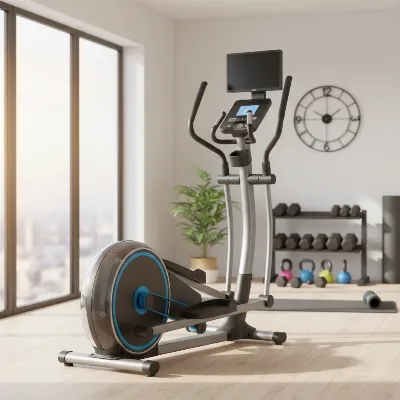 A sleek, modern front-drive elliptical trainer in a bright, minimalist home gym setting with natural light
Important Factors to Consider When Buying a Front-Drive Elliptical Trainer
Investing in a front-drive elliptical requires careful consideration of several key features to ensure it meets your fitness goals and fits seamlessly into your lifestyle.
Stride Length
The stride length is the maximum distance your foot travels with each forward and backward motion. This is perhaps the most critical factor for comfort and effective training. An ill-fitting stride length can lead to an awkward, uncomfortable workout and potential joint strain.
- Ideal Range: Most users find a stride length between 18 and 20 inches comfortable. Taller individuals (over 6 feet) might prefer 20 inches or more, while shorter users can typically work with 16-18 inches.
- Adjustability: For households with multiple users of varying heights, an elliptical with an adjustable stride length is invaluable, allowing each person to customize their workout experience. Some advanced models even offer auto-adjustable strides that adapt to your movement.
Resistance Levels
Resistance levels determine the intensity of your workout. A machine with a wide range of resistance levels allows for progressive training and accommodates different fitness levels, from beginners to advanced athletes.
- Types: Most modern ellipticals use magnetic resistance, which is quiet and smooth. Electromagnetic resistance, found in higher-quality models, offers precise and consistent resistance changes.
- Variety: Look for at least 16-20 levels to ensure enough versatility for various workout programs and long-term progression. The transitions between levels should be smooth, not jerky.
Flywheel Weight
The flywheel’s weight significantly impacts the smoothness and stability of the elliptical’s motion. A heavier flywheel generates more inertia, leading to a fluid, quiet, and consistent stride, reducing the “jerky” feeling often associated with lighter flywheels.
- Recommendation: Aim for a flywheel weight of at least 20 pounds. High-quality machines often feature flywheels between 25-35 pounds, providing a superior user experience.
- Overall Machine Weight: A heavier overall machine weight generally indicates a more robust build and can provide better stability, especially during intense workouts.
Display and Programs
The console is your central hub for tracking progress and engaging with your workout. A clear, easy-to-read display is essential.
- Metrics: Look for a display that shows vital statistics such as time, distance, speed, calories burned, and heart rate.
- Programs: Built-in workout programs (e.g., interval training, hill climbs, fat-burn) add variety and motivation, helping you achieve specific fitness goals. Many models also offer custom program creation.
Connectivity
In today’s connected world, many ellipticals offer smart features that enhance the user experience.
- Bluetooth: Allows you to connect heart rate monitors, wireless headphones, or sync your workout data with fitness apps on your smartphone or tablet.
- App Integration: Compatibility with popular fitness apps like iFIT, MyFitnessPal, or manufacturer-specific apps provides access to guided workouts, virtual scenic routes, and advanced performance tracking.
Durability and Quality
A durable elliptical trainer is a long-term investment. High-quality construction ensures stability, longevity, and a better workout experience.
- Materials: A robust steel frame is crucial. Inspect the joints and moving parts for solid construction.
- User Weight Capacity: Check the maximum user weight capacity; a higher capacity often correlates with a more durable frame.
- Warranty: A strong warranty (e.g., lifetime or 10-15 years on the frame, 1-3 years on parts, 1 year on labor) indicates the manufacturer’s confidence in their product’s quality.
Size and Space
As front-drive ellipticals are often chosen for their compact design, it’s still important to measure your available space. Consider not only the footprint but also the clearance needed for moving parts and for you to comfortably get on and off the machine. Foldable designs can offer additional space-saving benefits.
Comparing the Best Front-Drive Elliptical Trainers of 2026
When it comes to front-drive ellipticals, several models consistently receive high praise for their performance, features, and value. Here’s a look at some of the best front-drive options to consider in 2026, including a comparison table and detailed reviews.
| Brand/Model | Price Range | Stride Length (Inches) | Flywheel Weight (Lbs) | Key Features | Pros | Cons |
|---|---|---|---|---|---|---|
| NordicTrack AirGlide 14i | Mid-High | 18-20 (Adjustable) | 25-30 | 14″ HD Touchscreen, iFIT Enabled, Incline/Decline, SMR Resistance | Immersive workouts, adjustable stride, incline/decline, quiet operation | Requires iFIT subscription for full features, relatively large footprint |
| Sole E95 | Mid-High | 20 (Fixed) | 27 | Large console, Bluetooth Audio, Integrated Tablet Holder, Power Incline | Excellent ergonomics, robust build, smooth motion, great warranty | Fixed stride might not suit everyone, large footprint |
| NordicTrack Commercial 14.9 | Mid-High | 17.5-18.7 (Adjustable) | 32 | 14″ HD Touchscreen, iFIT Enabled, Auto-Adjust Incline, SMR Resistance | Heavy flywheel, interactive training, comfortable stride, durable | iFIT subscription needed, can be bulky |
NordicTrack AirGlide 14i
The NordicTrack AirGlide 14i stands out as a top contender for front-drive ellipticals, known for its immersive training experience and versatility. It features a vibrant 14-inch HD touchscreen display that integrates seamlessly with iFIT, NordicTrack’s interactive fitness platform. With iFIT, users can access an extensive library of live and on-demand trainer-led workouts that automatically adjust the machine’s resistance and incline. The AirGlide 14i offers both incline and decline capabilities, an adjustable stride length, and a smooth, silent magnetic resistance system. This combination allows for highly dynamic workouts that target various muscle groups and simulate diverse terrains, from mountain climbs to downhill glides. Its ergonomic design ensures comfort, making it suitable for users seeking a challenging yet joint-friendly exercise.
Sole E95 Elliptical
The Sole E95 is consistently praised for its exceptional quality, smooth operation, and ergonomic design, making it a favorite among serious home fitness enthusiasts. This robust front-drive elliptical boasts a substantial 27-pound flywheel, ensuring a fluid and quiet stride. It features a comfortable 20-inch stride length and a power incline that allows users to target different muscle groups and add intensity to their workouts. The E95’s console is user-friendly, offering a variety of pre-set programs, a clear display, and Bluetooth audio speakers. With its heavy-duty steel frame and high weight capacity, the Sole E95 is built for durability and stability, providing a gym-quality workout experience in the comfort of your home. Its strong warranty package further solidifies its position as a reliable long-term investment.
NordicTrack Commercial 14.9
Another strong offering from NordicTrack, the Commercial 14.9, is designed for those who demand high performance and advanced features. This front-drive elliptical features an impressive 32-pound inertia-enhanced flywheel, providing an incredibly smooth and consistent motion, even during the most strenuous workouts. It comes with a 14-inch HD touchscreen, offering access to the iFIT interactive training platform with thousands of global and studio workouts. The machine includes a 0-20% adjustable power incline and 26 levels of digital silent magnetic resistance, allowing for precise control over workout intensity and muscle targeting. Its adjustable stride length (17.5-18.7 inches) caters to a wider range of users, ensuring a comfortable and effective workout for nearly everyone. The Commercial 14.9 is built with a sturdy frame, reflecting its commercial-grade durability suitable for intensive daily use.
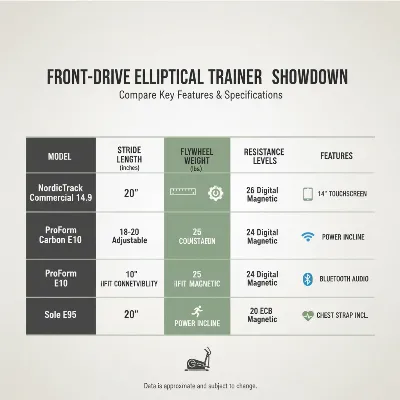 A clear, easy-to-read comparison chart highlighting features of several front-drive elliptical trainers for home use
Front-Drive Elliptical Trainer Buying Guide
Navigating the market for a new elliptical can feel overwhelming. By following a structured approach, you can narrow down your options and confidently select the best front-drive model for your needs.
Determine Your Budget
Elliptical trainers span a wide price range, from budget-friendly options under $500 to high-end commercial-grade machines exceeding $3,000.
- Entry-Level (Under $1000): Often feature lighter flywheels, fewer resistance levels, and basic consoles. May have fixed stride lengths.
- Mid-Range ($1000-$2000): Typically offer heavier flywheels, more resistance levels, adjustable stride options, and advanced console features like interactive programs and Bluetooth connectivity. This is often the sweet spot for home users seeking a balance of features and value.
- High-End (Over $2000): Provide commercial-grade construction, the heaviest flywheels, premium displays, extensive smart features (e.g., iFIT integration), and superior ergonomics.
Identify Your Usage Needs
Your fitness goals and how frequently you plan to use the elliptical should heavily influence your choice.
- Fitness Goals: Are you aiming for weight loss, endurance building, injury recovery, or general fitness? Machines with diverse programs and incline options are great for varied goals.
- Frequency: If you plan to use it daily for intense workouts, prioritize durability, a heavy flywheel, and advanced features. For occasional or lighter use, a mid-range model might suffice.
- Multiple Users: If several people will be using the machine, an adjustable stride length and a high user weight capacity are important considerations.
Read Reviews and Comparisons
Before committing to a purchase, take the time to research thoroughly.
- Expert Reviews: Consult reputable fitness equipment review sites and publications for in-depth analyses.
- User Reviews: Read feedback from actual users on retailer websites and forums to gain insights into real-world performance, durability, and customer service. Pay attention to common complaints or praises.
Try Before You Buy
If possible, visit a local fitness equipment store to physically try out different front-drive elliptical models.
- Feel the Stride: Experience the motion firsthand. Does the stride feel natural and comfortable for your height? Does it feel jerky or smooth?
- Check Stability: Ensure the machine feels stable and doesn’t wobble during your workout.
- Assess Ergonomics: Pay attention to pedal spacing (Q-factor), handlebar grips, and console accessibility.
Evaluate Warranty and Support
A strong warranty and reliable customer support are critical for peace of mind and long-term satisfaction.
- Frame Warranty: Look for a lifetime warranty or at least 10-15 years.
- Parts and Labor: Aim for at least 1-3 years on parts and 1 year on labor.
- Customer Service: Research the manufacturer’s reputation for customer support and availability of spare parts.
Tips for Using and Maintaining Your Front-Drive Elliptical Trainer
Maximizing the lifespan and performance of your front-drive elliptical, and ensuring your workouts are effective and safe, involves proper usage and consistent maintenance.
Warm-Up and Cool-Down Correctly
Just like any exercise, proper warm-up and cool-down routines are essential to prevent injuries and optimize performance.
- Warm-Up: Begin with 5-10 minutes of light cardio on the elliptical at a low resistance, combined with dynamic stretches, to prepare your muscles and cardiovascular system.
- Cool-Down: Gradually decrease your speed and resistance for 5-10 minutes, followed by static stretches targeting the legs, glutes, and upper body.
Adjust Posture and Technique
Correct posture ensures you’re engaging the right muscles and avoiding strain.
- Upright Stance: Keep your back straight, shoulders relaxed, and head up. Avoid hunching over the console.
- Core Engagement: Engage your abdominal muscles throughout the workout to support your spine.
- Full Range of Motion: Allow your legs and arms to move through their full range of motion. Use the moving handlebars to engage your upper body evenly.
- Foot Placement: Keep your entire foot on the pedals to distribute weight evenly and prevent numbness or discomfort.
Regular Cleaning and Maintenance
Consistent care will significantly extend the life of your elliptical trainer and keep it running smoothly.
- After Every Use: Wipe down the console, handlebars, and pedals with a soft, damp cloth to remove sweat and dust. Sweat’s salt content can be corrosive over time.
- Weekly: Check and tighten any loose bolts, nuts, and screws. Vibrations from use can cause them to loosen, leading to noise or instability.
- Monthly: Perform a more thorough cleaning of the machine, paying special attention to the tracks and rollers (for front-drive models) to remove accumulated dirt and debris. Use a mild cleaning solution, avoiding harsh chemicals.
- Lubrication: Lubricate moving parts (like pivot points, pedal support tubes, and arm mechanisms) every 3-6 months as per the manufacturer’s instructions. Use a silicone-based or PTFE lubricant, applying sparingly to avoid attracting dust.
- Internal Cleaning (Annually): Twice a year, unplug the machine, carefully remove the external housing, and vacuum around internal components to remove dust and pet hair that can affect electronics.
Replace Components When Necessary
Don’t ignore signs of wear and tear, as small issues can lead to bigger, more expensive problems or even safety hazards.
- Listen for Noises: Squeaks, grinding, or clunking sounds often indicate a need for lubrication, tightening, or component replacement.
- Inspect Parts: Regularly check cables, rollers, pedals, and arm attachments for cracks, wear, or deformation. Replace any damaged parts promptly using manufacturer-approved components.
- Consult Manual: Always refer to your elliptical’s user manual for specific maintenance guidelines and troubleshooting tips.
Conclusion
A front-drive elliptical trainer offers an exceptional pathway to achieving your fitness goals from the convenience of your home, especially for those prioritizing space efficiency. By understanding their unique “uphill” stride, considering crucial factors like stride length, flywheel weight, and connectivity, and committing to regular maintenance, you can ensure your investment pays dividends for years to come. The top models of 2026, such as the NordicTrack AirGlide 14i, Sole E95, and NordicTrack Commercial 14.9, demonstrate the innovation and quality available in this category. With the right front-drive elliptical, you’re not just buying a machine; you’re investing in a more active, healthier future.
What features are most important to you in a home fitness machine?
Frequently Asked Questions
What is the primary difference in feel between front-drive and rear-drive ellipticals?
Front-drive ellipticals tend to create a motion that feels slightly more like an uphill climb or stair-stepper, often with a slight forward lean. Rear-drive ellipticals, conversely, typically offer a flatter, more natural stride that closely mimics walking or running on level ground, often perceived as smoother and more ergonomic.
Are front-drive ellipticals better for small spaces?
Yes, generally, front-drive ellipticals are more compact than rear-drive models because their flywheel is positioned at the front, taking up less length. This design makes them a popular choice for individuals with limited home gym space. However, always check the machine’s full dimensions.
How important is flywheel weight for a front-drive elliptical?
Flywheel weight is very important for a front-drive elliptical as it directly influences the smoothness, stability, and quietness of your workout. A heavier flywheel (ideally 20 pounds or more) provides greater inertia, resulting in a more fluid and comfortable stride, preventing jerky movements.
What stride length should I look for in a front-drive elliptical?
For most users, a stride length between 18 to 20 inches is ideal for comfort and effective full-body engagement. Taller individuals (over 6 feet) might prefer 20 inches or more, while adjustable stride lengths are excellent for households with multiple users of different heights.
How often should I perform maintenance on my front-drive elliptical?
Regular maintenance is key. Wipe down your machine after every use to remove sweat. Tighten bolts weekly, and perform a more thorough cleaning of tracks and rollers monthly. Lubricate moving parts every 3-6 months as per the manufacturer’s guide, and inspect components for wear periodically.
Frequently Asked Questions
What is the primary difference in feel between front-drive and rear-drive ellipticals?
Front-drive ellipticals typically create a motion that feels like an uphill climb or stair-stepper, often with a slight forward lean. Rear-drive ellipticals, in contrast, offer a flatter, more natural stride that closely mimics walking or running on level ground, often perceived as smoother and more ergonomic.
Are front-drive ellipticals better for small spaces?
Yes, front-drive ellipticals are generally more compact than rear-drive models because their flywheel is positioned at the front, requiring less length. This design makes them a popular choice for individuals with limited home gym space. Always check the machine's full dimensions before purchasing.
How important is flywheel weight for a front-drive elliptical?
Flywheel weight is very important for a front-drive elliptical as it directly influences the smoothness, stability, and quietness of your workout. A heavier flywheel, ideally 20 pounds or more, provides greater inertia, resulting in a more fluid and comfortable stride and preventing jerky movements.
What stride length should I look for in a front-drive elliptical?
For most users, a stride length between 18 to 20 inches is ideal for comfort and effective full-body engagement. Taller individuals (over 6 feet) might prefer 20 inches or more. Adjustable stride lengths are excellent for households with multiple users of different heights.
How often should I perform maintenance on my front-drive elliptical?
Regular maintenance is crucial for longevity. Wipe down your machine after every use to remove sweat. Tighten bolts weekly, and perform a thorough cleaning of tracks and rollers monthly. Lubricate moving parts every 3-6 months as per the manufacturer's guide, and inspect components for wear periodically.
Maintain Your Front-Drive Elliptical Trainer
Follow these steps to ensure your front-drive elliptical trainer performs optimally and lasts longer, preventing common issues like noise and instability.
Wipe down the console, handlebars, and pedals with a soft, damp cloth after each workout. This removes sweat and dust, preventing corrosive salt buildup that can damage components over time.
Check and tighten any loose bolts, nuts, and screws on your elliptical trainer weekly. Vibrations from regular use can cause these fasteners to loosen, potentially leading to increased noise or instability during workouts.
Once a month, conduct a more thorough cleaning of the machine, focusing on the tracks and rollers specific to front-drive models. Use a mild cleaning solution to remove accumulated dirt and debris, avoiding harsh chemicals that could damage surfaces.
Lubricate moving parts such as pivot points, pedal support tubes, and arm mechanisms every 3-6 months, following your manufacturer's instructions. Use a silicone-based or PTFE lubricant sparingly to ensure smooth operation and prevent dust accumulation.
Regularly inspect cables, rollers, pedals, and arm attachments for any signs of cracks, wear, or deformation. Address squeaks, grinding, or clunking sounds promptly. Replace any damaged parts immediately with manufacturer-approved components to maintain safety and performance.

After reading up on front-drive elliptical trainers, I decided to go with one for my small apartment. The compact footprint is a huge plus, and I love how it engages both my upper and lower body. It’s made a big difference in my workout routine, and I feel like I’m getting a much more comprehensive workout than before. Highly recommend for anyone with limited space.
I’ve been using the NordicTrack AirGlide 14i for about a month now, and it’s fantastic. The adjustable stride length really makes a difference, and the interactive training programs keep me motivated. It fits perfectly in my spare room without taking up too much space, which was a big concern for me. Definitely a solid investment for home fitness.
The Sole E95 is pretty good for the price, and the heavy flywheel makes for a smooth workout. My only real complaint is that the assembly instructions were a bit confusing, and it took longer than I expected to put together. Once it was set up, though, it’s been reliable for my daily cardio. Just wish the setup was smoother.
I was looking for a low-impact option to replace my old treadmill, and a front-drive elliptical was exactly what I needed. The NordicTrack Commercial 14.9 has been great for getting a full-body workout without putting stress on my knees. The uphill climb feel is a nice change of pace, and it feels very sturdy during use.