Assembling a new elliptical trainer at home typically takes 1 to 3 hours and requires careful attention to detail to ensure safety and longevity. Proper assembly involves methodical unpacking, thorough review of the instruction manual, and gradual tightening of all fasteners. This guide outlines the critical steps from preparation to final safety checks, ensuring your elliptical is ready for effective workouts.
Understanding Your Elliptical Trainer and Why Safe Assembly Matters
An elliptical trainer provides a low-impact, full-body workout that enhances cardiovascular health and endurance. However, these benefits are fully realized only when the machine is assembled meticulously and securely. Incorrect assembly can lead to instability, premature wear, irritating noises, and severe safety hazards, potentially voiding your warranty. Prioritizing safe and accurate assembly ensures your investment performs optimally for years.
Key Components and Assembly Considerations for Different Elliptical Types
Most elliptical trainers share fundamental components: a sturdy base frame, a flywheel for resistance, pedal arms and footpads, handlebars for upper body engagement, and a console for tracking data. Understanding these parts clarifies the instruction manual. Different drive types—front-drive, rear-drive, or center-drive—can subtly influence the assembly sequence, especially for the main drive shaft and flywheel. Always refer to your specific model’s manual for detailed component identification and unique steps.
Essential Preparations for a Smooth Assembly Process
Thorough preparation is paramount before beginning assembly. This initial phase minimizes errors and frustration, preventing missing parts, damaged components, or an unstable machine.
Unpacking and Inventory Check
Begin by carefully inspecting the packaging for damage. Unpack all components methodically, laying them out in an organized manner. Cross-reference every part against the hardware list in your instruction manual, identifying all bolts, washers, nuts, and larger frame pieces. If anything is missing or damaged, contact the manufacturer’s customer service immediately for replacements before proceeding.
Selecting Your Assembly Space
Choose a spacious, level, and flat area for assembly, ideally where the elliptical will permanently reside. This avoids moving a heavy, awkward machine later. Ensure at least 40 inches (1 meter) of clear space around the machine for free movement during assembly and safe operation. Placing a protective mat or old blanket on the floor is advisable to prevent scratches.
Gathering the Right Tools
Most elliptical trainers include basic assembly tools like Allen wrenches and a spanner. While often sufficient, a high-quality Phillips head screwdriver, a set of socket wrenches, or an adjustable wrench can ease the process and enhance security. Avoid mismatched or cheap tools that could strip bolt heads. Always use the recommended tools specified in your manual to ensure correct and safe fastener tightening.
Thoroughly Reviewing the Instruction Manual
|
Our Picks for the Best Elliptical Trainer in 2026
As an Amazon Associate I earn from qualifying purchases.
|
||
| Num | Product | Action |
|---|---|---|
| 1 | Cubii JR1, Under Desk Elliptical, Under Desk Bike Pedal Exerciser, Seated Elliptical, Work from Home Fitness, Mini Elliptical Machines for Home Use, Cubii Exerciser for Seniors, Desk Exercise |

|
| 2 | Under Desk Elliptical Machine, Electric Elliptical Leg Exerciser for Seniors Fully Assembled, Quiet & Portable Electric Seated Pedal Exerciser with Remote Control & 12 Adjustable Speeds |
|
| 3 | Sunny Health & Fitness Cardio Climber Stepping Elliptical Exercise Machine for Home with 8 Levels of Magnetic Resistance, Performance Monitor, Full Body Workout |
|
| 4 | Under Desk Elliptical Machine, Electric Seated Pedal Exerciser, Min Leg Exerciser with Remoter, 12 Level Speeds, Forward & Reverse Direction, Manual & Auto Mode for Home Office |
|
| 5 | Under Desk Elliptical Machine, Upgraded 6 Adjustable Resistance &15 Speeds Electric Elliptical Leg Exerciser while Sitting for Seniors with Forward & Reverse Direction, Touch Screen and Remote Control |
|
| 6 | Under Desk Elliptical Machine, Electric Ellipse Leg Exerciser for Senior, Quiet and Compact Electric Seated Pedal Exerciser for Home with Display Monitor, Remote Control and 12 Adjustable Speeds |
|
| 7 | Elliptical Exercise Machine for Apartments and Homes,8 Levels of Magnetic Resistance,15.5-inch Stride Elliptical Machine, and Supports Users up to 400 pounds Elliptical Training Machines; |
|
| 8 | Under Desk Elliptical Machine, Electric Elliptical Leg Exerciser While Sitting for Seniors with Upgraded 15 Speeds & 12 Auto Mode, Forward & Reverse Direction, Quiet Portable Seated Pedal Exerciser |
|
| 9 | JLL Smart Mini Elliptical – Low-Impact Cardio, Quiet Magnetic Resistance (8 Levels), Compact for Home or Office, LCD Display, Bluetooth SunnyFit App Compatible |
|
| 10 | Under Desk Elliptical Machine, Electric Elliptical as Seen on TV for Seniors Adults with 15 Adjustable Speed, Quiet & Portable Electric Seated Pedal Exerciser with Remote Control & 5 Auto Mode |
|
Before any physical assembly, read your entire instruction manual from cover to cover. Pay close attention to safety warnings, diagrams, and specific notes about cable routing, tightening sequences, or weight limits. Understanding the overall process and identifying tricky steps beforehand saves significant time and prevents costly mistakes. Do not skip ahead or rely solely on diagrams without reading the accompanying text.
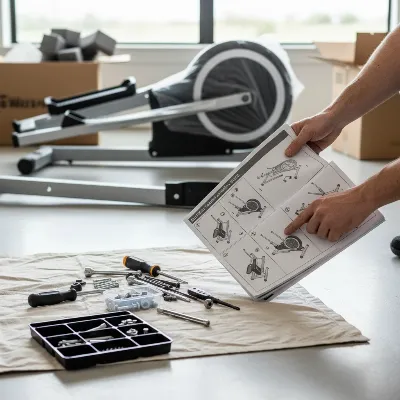 A person preparing tools and reading an instruction manual before assembling an elliptical trainer at home
Step-by-Step Guide to Assembling Your Elliptical Trainer Safely
While every elliptical model has unique aspects, the core assembly process follows a general pattern. Always refer to your specific manual for precise instructions. This guide highlights common stages and critical safety considerations for a robust setup. Due to the size and weight of many components, having a second person to assist is highly recommended.
Securing the Base and Stabilizers
The foundation of your elliptical’s stability is its base frame and stabilizers. Attach the front and rear stabilizer tubes to the main base frame, ensuring all bolts, spring washers, and flat washers are in place and only partially threaded initially. This allows for slight adjustments. Once all bolts for a section are in position, gradually and evenly tighten them, moving from one side to the other. This prevents stress on the frame and ensures a level, secure base.
Installing the Console Mast and Wiring
Next, install the console mast, which supports the display and handlebars. This step often involves carefully routing electrical wires from the main frame through the console mast to connect to the display unit later. Prevent pinching, crimping, or stretching these wires, as damage can lead to electrical malfunctions. Once wires are safely routed, attach the console mast to the main frame, securing it with all designated bolts and washers, tightening them progressively for a firm connection.
Assembling the Pedal Arms and Flywheel Mechanism
This stage connects the moving parts responsible for the elliptical’s stride. For rear-drive ellipticals, attach the flywheel and its housing, then connect the pedal arms to the main axle. For front-drive models, pedal arms attach near the front flywheel. Pay close attention to left (L) and right (R) markings. Apply a light application of grease to pivot points or moving axles if recommended, aiding smooth operation and reducing squeaking. Secure all bolts with precision, ensuring pedal arms move freely without excessive wobble.
Attaching Handlebars and Connecting Cables
With the main structure in place, install the handlebars. These usually consist of lower and upper sections connecting to the console mast and pedal arms. Ensure correct alignment and firm security. Some models include hand pulse sensors, requiring additional wire routing through the handlebars to the console. Connect any remaining resistance wires, hand pulse cables, and other data cables to the appropriate ports on the back of the console. Connections must be snug but not forced. After assembly, handlebars should rotate freely, but do not use them for support until the entire machine is fully assembled and checked.
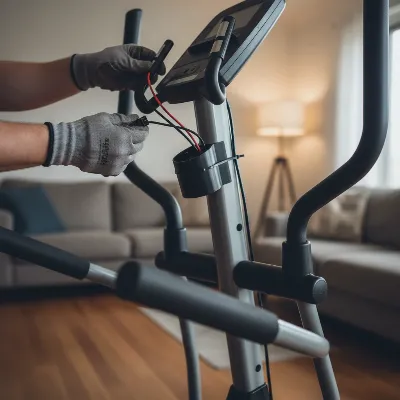 Close-up of hands connecting handlebars and wires on an elliptical trainer during assembly at home
Finalizing the Console and Footpads
Finally, attach the console unit to its mounting plate on the console mast. Secure it with specified screws, ensuring all connected wires are neatly tucked inside the mast or console housing. Install the footpads onto the pedal arms, ensuring they are stable and correctly oriented. Before your first use, gently shake the entire machine to test its overall stability and ensure no parts are visibly loose.
Expert Tips for a Smooth and Secure Assembly
Assembling an elliptical trainer can be challenging, but these expert tips streamline the process and enhance safety. Avoid common pitfalls by taking a methodical approach.
Don’t Rush and Seek Assistance
Patience is crucial during assembly. Rushing can lead to overlooked steps or incorrect connections. If instructions seem complex or parts are heavy, ask a friend or family member for help. Many manufacturers recommend two-person assembly, especially for lifting the main frame or aligning large components. An extra pair of hands prevents personal injury and machine damage.
Gradual and Even Tightening
One of the most critical aspects is how you tighten bolts. Avoid fully tightening any single bolt immediately. Instead, insert all bolts for a section and hand-tighten them first. Then, gradually tighten them with your wrench in an alternating or crisscross pattern. This method ensures components are drawn together evenly, preventing misalignment, wobbling, or undue stress. Over-tightening can strip threads, while under-tightening results in an unstable machine. A light application of lithium bike grease on bolt threads, if recommended, can aid smooth tightening.
Double-Check All Connections
Once assembly is complete, perform a thorough final inspection. Re-check every nut, bolt, screw, and electrical connection. Wiggle handlebars and pedal arms, and gently rock the entire machine to test for loose parts or instability. Identifying and rectifying issues before your first workout is crucial. Ensure all wires are securely connected and tucked away to prevent snagging or damage.
Understanding Warranty and Support
Keep your instruction manual, purchase receipt, and warranty information in a safe place. Familiarize yourself with the manufacturer’s warranty policy regarding assembly and use. If you encounter difficulties or find missing/damaged parts, contact customer support. They provide guidance, replacement parts, or troubleshooting assistance, protecting your consumer rights.
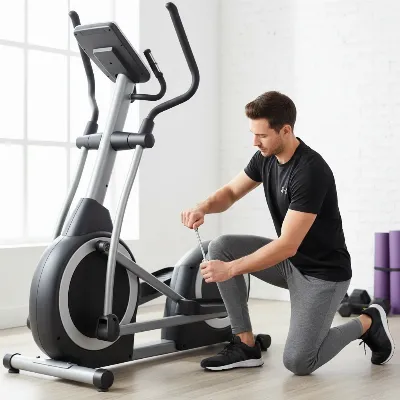 Person performing a final safety check on a newly assembled elliptical trainer in a home gym setting
Post-Assembly: First Use and Maintenance for Longevity
After your elliptical trainer is fully assembled and double-checked, a few final steps ensure safe and effective operation for years.
Initial Safety Check and Leveling
Before your first workout, conduct a comprehensive safety walk-around. Test stability by gently rocking the machine. If wobbling occurs, use the adjustable leveling feet on the stabilizer bars to stabilize the machine. Ensure the elliptical is perfectly level to prevent uneven wear and noisy operation. Check that all moving parts, such as pedal arms and handlebars, move smoothly without catching or unusual sounds.
First Workout and Observation
Begin your first workout with light intensity and short duration. Pay close attention to the machine’s performance. Listen for unexpected squeaks, creaks, or grinding noises. Observe the console to ensure correct function and accurate metrics. If anything feels off, pause your workout and consult your manual’s troubleshooting section or re-examine relevant assembly points. Early detection prevents larger problems.
Routine Care and Troubleshooting
Regular maintenance extends your elliptical’s lifespan. Periodically, at least once a month, re-tighten all bolts and screws, as vibrations can loosen them. Keep the machine clean by wiping surfaces with a damp cloth, avoiding harsh chemical cleaners. Lubricate specified pivot points or moving joints as recommended to prevent stiffness and noise. Addressing minor issues promptly ensures your elliptical remains a reliable part of your fitness routine.
Conclusion
Assembling a new elliptical trainer at home doesn’t have to be daunting. By committing to careful preparation, patiently following instructions, and meticulously executing each step, you can build a safe, stable, and effective piece of fitness equipment. A properly assembled elliptical ensures your safety, smooth operation, and the longevity you expect from your investment. Taking the time upfront for correct assembly paves the way for countless enjoyable and impactful workouts in your home.
Frequently Asked Questions
How long does it take to assemble an elliptical trainer?
The assembly time for an elliptical trainer typically ranges from 1 to 3 hours, depending on the model’s complexity and your experience level. Having a second person to assist can significantly reduce this time.
Do I need special tools to assemble an elliptical?
Most ellipticals come with the basic Allen wrenches and a spanner needed for assembly. However, having a good quality Phillips head screwdriver and a socket wrench set can make the process easier and ensure all bolts are securely tightened.
What should I do if parts are missing from the box?
If you find any missing or damaged parts during the inventory check, stop assembly immediately. Contact the manufacturer’s customer service with your model number, serial number, and a list of the missing components to arrange for replacements.
Can I assemble an elliptical by myself?
While some smaller or partially pre-assembled ellipticals can be put together by one person, it is strongly recommended to have two people for assembly. Many parts are heavy and bulky, making two-person lifting and alignment much safer and more efficient.
How do I know if my elliptical is assembled correctly?
After assembly, perform a thorough safety check: ensure all bolts are tight, the machine is stable and level, and all moving parts operate smoothly without unusual noises or catching. A short, light test workout will also help confirm proper function.
Frequently Asked Questions
How long does it take to assemble an elliptical trainer?
Assembling an elliptical trainer typically takes between 1 to 3 hours, varying by model complexity and individual experience. Enlisting a second person for assistance can significantly reduce the overall assembly time.
Do I need special tools to assemble an elliptical?
Most elliptical trainers include the necessary basic tools, such as Allen wrenches and a spanner. However, using a high-quality Phillips head screwdriver and a socket wrench set can simplify the process and ensure all bolts are securely tightened for optimal safety.
What should I do if parts are missing from the elliptical box?
If you discover any missing or damaged parts during the initial inventory check, immediately halt the assembly process. Contact the manufacturer's customer service, providing your model number, serial number, and a detailed list of the affected components to arrange for replacements.
Can I assemble an elliptical by myself, or do I need help?
While some smaller or partially pre-assembled ellipticals might be manageable for one person, it is strongly recommended to have two people for assembly. Many components are heavy and bulky, making two-person lifting and alignment considerably safer and more efficient.
How can I confirm my elliptical is assembled correctly and safely?
After assembly, conduct a comprehensive safety check: verify all bolts are tight, ensure the machine is stable and level, and confirm all moving parts operate smoothly without unusual noises. A brief, light test workout will further help confirm proper function and stability.
How to Safely Assemble Your Elliptical Trainer
This guide provides a step-by-step procedure for safely assembling your new elliptical trainer at home, ensuring stability and longevity.
Unpack all components and verify them against the manual's hardware list. Choose a spacious, level assembly area, ideally where the elliptical will permanently reside, and gather any additional tools like a Phillips head screwdriver or socket wrench set. Read the entire instruction manual thoroughly before starting.
Attach the front and rear stabilizer tubes to the main base frame, partially threading all bolts initially, then tightening them gradually and evenly. Next, carefully route electrical wires through the console mast, preventing pinching, and secure the console mast to the main frame with designated bolts and washers.
Connect the flywheel and its housing (if applicable), then attach the pedal arms to the main axle, paying close attention to left (L) and right (R) markings. Apply light grease to pivot points if recommended. Secure all bolts precisely, ensuring pedal arms move freely without excessive wobble.
Install the handlebars, ensuring they are correctly aligned and firmly secured to the console mast and pedal arms. Route any hand pulse sensor wires through the handlebars and connect all resistance, hand pulse, and data cables snugly to the appropriate ports on the console. Handlebars should rotate freely.
Attach the console unit to its mounting plate, securing it with screws and tucking all wires neatly. Install the footpads onto the pedal arms, ensuring stability. Before first use, gently shake the entire machine to test stability, re-check all bolts, and ensure all moving parts operate smoothly.

This was a solid walkthrough for assembling my elliptical. I appreciated the emphasis on gradually tightening all fasteners; I probably would have just cranked them down right away otherwise. My only minor complaint is that one of the diagrams in my actual manual was a bit unclear, but the general advice here still got me through it. Good stuff.
I followed the steps for my new machine, especially the part about reviewing the instruction manual thoroughly. While it was helpful, I still had a bit of trouble with one of the smaller components not lining up perfectly. It eventually went together, but it took me closer to 3 hours, which was a bit longer than I hoped. It’s working fine now though.
I was dreading putting together my new elliptical, but this guide made it so much easier. The tip about methodical unpacking really helped me keep track of all the parts. It took me about 2 hours, just like the post mentioned, and everything feels super secure. Definitely recommend following these steps for anyone setting up their own machine.
So glad I found this before I started! The safety checks at the end were a lifesaver. I actually found a slightly loose bolt that I missed during the initial tightening phase. It’s great to know my elliptical is stable and ready for my workouts without any worries about instability.