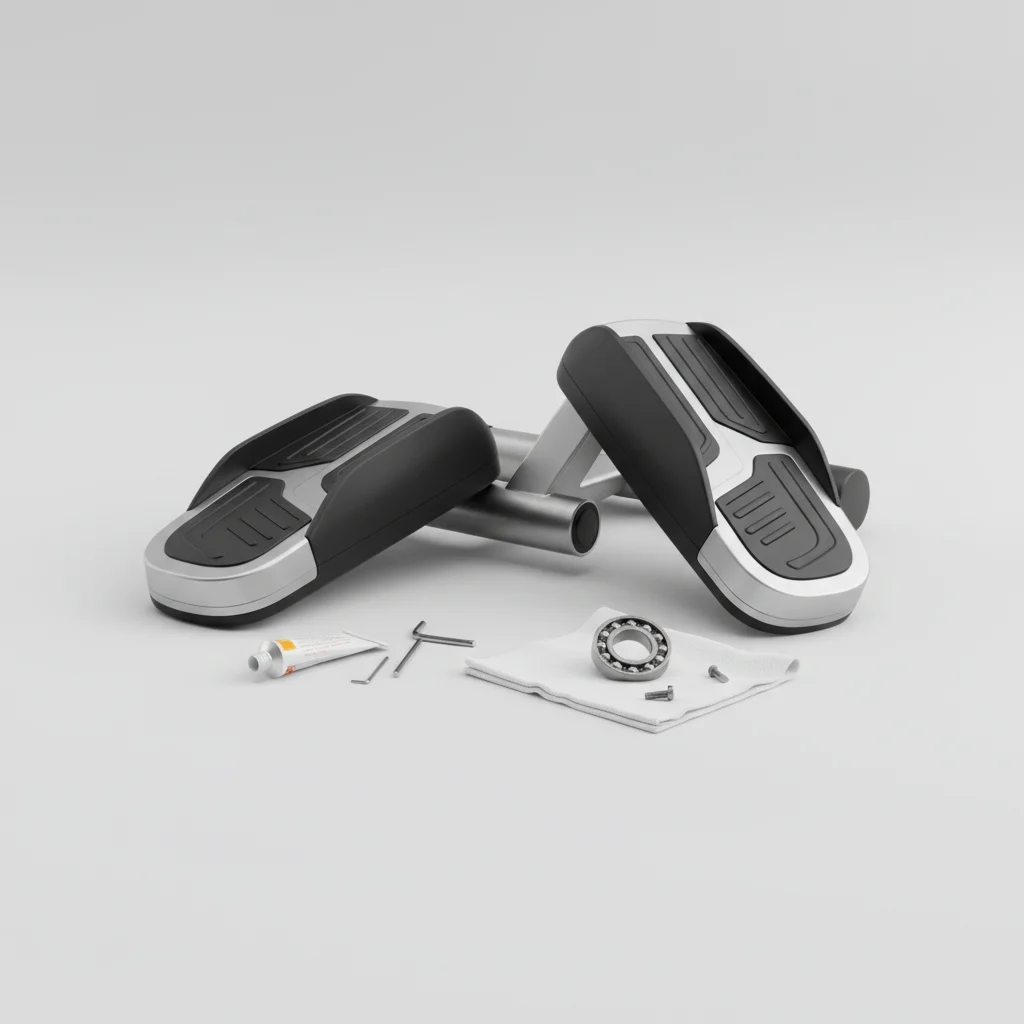
Elliptical trainer pedals can develop several common issues over time, including squeaking, wobbling, or becoming completely detached. Addressing these problems promptly can prevent further damage and ensure a smooth, safe workout experience. Typically, most pedal issues can be resolved with basic tools and a few hours of your time.
Diagnosing Squeaking Pedals
Squeaking pedals are often caused by friction between moving parts or loose connections. Start by inspecting the pedal axles and the pivot points where the pedals attach to the stride arms. Apply a small amount of silicone-based lubricant to these areas. If the squeaking persists, the issue might be internal, such as worn bushings or bearings within the pedal mechanism itself. In such cases, a more thorough disassembly might be required to identify and replace the faulty components. For explore our home fitness reviews on this site.
Addressing Wobbling Pedals
Wobbling pedals indicate loose fasteners or worn components. First, check all visible bolts and screws securing the pedals to the stride arms and the pedal plates themselves. Tighten any loose fasteners using the appropriate wrench or Allen key. If the wobbling continues after tightening, the problem could be worn washers, bushings, or even a bent pedal arm. Replacing these worn parts is crucial for stability and safety during your workout.
Fixing Detached Pedals
|
Our Picks for the Best Elliptical Trainer in 2026
As an Amazon Associate I earn from qualifying purchases.
|
||
| Num | Product | Action |
|---|---|---|
| 1 | Under Desk Elliptical Machine, Electric Elliptical Leg Exerciser for Seniors Fully Assembled, Quiet & Portable Electric Seated Pedal Exerciser with Remote Control & 12 Adjustable Speeds |

|
| 2 | Under Desk Elliptical Machine, Upgraded 6 Adjustable Resistance &15 Speeds Electric Elliptical Leg Exerciser while Sitting for Seniors with Forward & Reverse Direction, Touch Screen and Remote Control |
|
| 3 | Sunny Health & Fitness Cardio Climber Stepping Elliptical Exercise Machine for Home with 8 Levels of Magnetic Resistance, Performance Monitor, Full Body Workout |
|
| 4 | JLL Smart Mini Elliptical – Low-Impact Cardio, Quiet Magnetic Resistance (8 Levels), Compact for Home or Office, LCD Display, Bluetooth SunnyFit App Compatible |
|
| 5 | Cubii JR1, Under Desk Elliptical, Under Desk Bike Pedal Exerciser, Seated Elliptical, Work from Home Fitness, Mini Elliptical Machines for Home Use, Cubii Exerciser for Seniors, Desk Exercise |
|
| 6 | Elliptical Exercise Machine for Apartments and Homes,8 Levels of Magnetic Resistance,15.5-inch Stride Elliptical Machine, and Supports Users up to 400 pounds Elliptical Training Machines; |
|
| 7 | Under Desk Elliptical Machine, Electric Ellipse Leg Exerciser for Senior, Quiet and Compact Electric Seated Pedal Exerciser for Home with Display Monitor, Remote Control and 12 Adjustable Speeds |
|
| 8 | Under Desk Elliptical Machine, Electric Elliptical Leg Exerciser While Sitting for Seniors with Upgraded 15 Speeds & 12 Auto Mode, Forward & Reverse Direction, Quiet Portable Seated Pedal Exerciser |
|
| 9 | Under Desk Elliptical Machine, Electric Elliptical as Seen on TV for Seniors Adults with 15 Adjustable Speed, Quiet & Portable Electric Seated Pedal Exerciser with Remote Control & 5 Auto Mode |
|
| 10 | Under Desk Elliptical Machine, Electric Seated Pedal Exerciser, Min Leg Exerciser with Remoter, 12 Level Speeds, Forward & Reverse Direction, Manual & Auto Mode for Home Office |
|
A detached pedal is a serious safety concern and requires immediate attention. This usually happens due to a completely loosened or broken bolt, or a fractured pedal arm. Carefully examine the point of detachment to determine the cause. If a bolt has come loose, reinsert it and tighten it securely. If the bolt is stripped or broken, it will need to be replaced. In cases of a fractured pedal arm, the entire arm assembly may need to be replaced, which can be a more involved repair.
Replacing Worn Pedal Components
Over time, components like pedal straps, anti-slip pads, and even the entire pedal assembly can wear out. Worn anti-slip pads can lead to foot slippage, increasing the risk of injury. Replacing these is usually straightforward, often involving just a few screws. If the entire pedal assembly is worn beyond repair, or if internal components like bearings are failing, sourcing a replacement pedal unit from the manufacturer or a reputable parts supplier is the best course of action. Always ensure the replacement parts are compatible with your specific elliptical model.
- Check all visible bolts and screws regularly.
- Apply silicone lubricant to pivot points every few months.
- Inspect anti-slip pads for wear and tear.
- Listen for unusual noises during your workout.
- Keep the area around pedals clean from debris.
Preventative Maintenance for Elliptical Pedals
Regular preventative maintenance can significantly extend the life of your elliptical trainer’s pedals and prevent many common issues. This includes routinely checking and tightening all fasteners, cleaning the pedal surfaces, and applying lubricant to moving parts as recommended by your machine’s manufacturer. Paying attention to any new noises or changes in pedal feel can help you catch minor issues before they escalate into major repairs.Investing in a high-quality elliptical from the start can also reduce the likelihood of premature wear on critical components like pedals.
