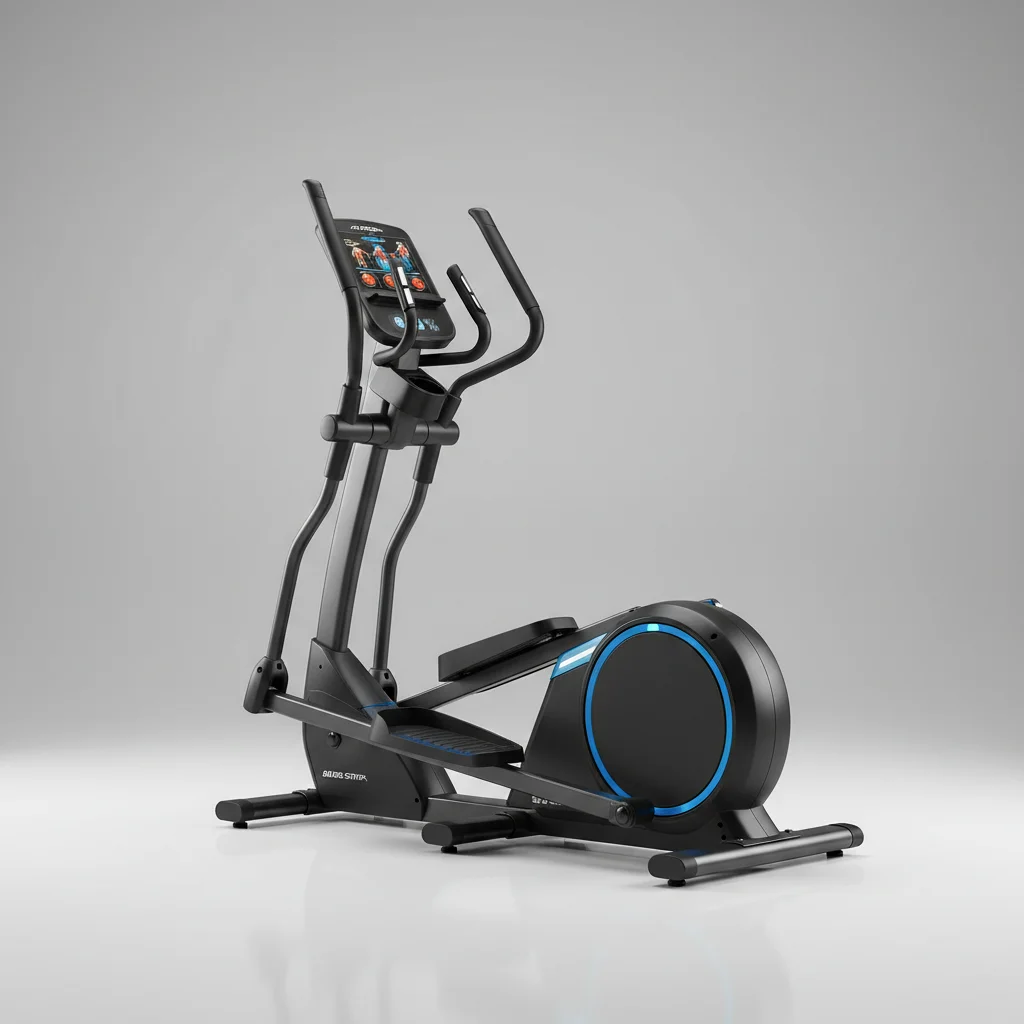
Elliptical trainer incline settings can significantly increase muscle engagement, particularly in the glutes and hamstrings, by up to 30% compared to a flat incline. This enhanced activation helps build strength and tone in the lower body, making your workout more effective for muscle development.
Understanding Elliptical Incline Mechanics
The incline feature on an elliptical trainer adjusts the angle of the ramp, mimicking uphill walking or climbing. This change in angle alters the biomechanics of your stride, forcing your muscles to work harder against gravity. Unlike resistance, which primarily affects the effort required to move the pedals, incline directly impacts which muscle groups are emphasized.
Most ellipticals offer a range of incline settings, typically from 0 to 20 degrees, allowing users to customize the intensity and target specific muscles. Higher incline settings will naturally lead to greater muscle activation and a more challenging cardiovascular workout.
Targeting Specific Muscle Groups with Incline
Increasing the incline on your elliptical trainer shifts the focus from primarily quadriceps activation to a more comprehensive engagement of the posterior chain. At higher inclines, your glutes and hamstrings are recruited more intensely to propel your body upwards, leading to greater strength and hypertrophy in these areas. Additionally, the calves and core muscles also experience increased activation as they work to stabilize your body and maintain balance.
For those looking to sculpt their lower body, incorporating varied incline levels into their routine is a highly effective strategy. It allows for a more dynamic workout that challenges muscles in different ways, preventing plateaus and promoting continuous progress.
Integrating Incline into Your Workout Routine
|
Our Picks for the Best Elliptical Trainer in 2026
As an Amazon Associate I earn from qualifying purchases.
|
||
| Num | Product | Action |
|---|---|---|
| 1 | Under Desk Elliptical Machine, Upgraded 6 Adjustable Resistance &15 Speeds Electric Elliptical Leg Exerciser while Sitting for Seniors with Forward & Reverse Direction, Touch Screen and Remote Control |

|
| 2 | Sunny Health & Fitness Cardio Climber Stepping Elliptical Exercise Machine for Home with 8 Levels of Magnetic Resistance, Performance Monitor, Full Body Workout |
|
| 3 | JLL Smart Mini Elliptical – Low-Impact Cardio, Quiet Magnetic Resistance (8 Levels), Compact for Home or Office, LCD Display, Bluetooth SunnyFit App Compatible |
|
| 4 | Under Desk Elliptical Machine, Electric Seated Pedal Exerciser, Min Leg Exerciser with Remoter, 12 Level Speeds, Forward & Reverse Direction, Manual & Auto Mode for Home Office |
|
| 5 | Under Desk Elliptical Machine, Electric Elliptical as Seen on TV for Seniors Adults with 15 Adjustable Speed, Quiet & Portable Electric Seated Pedal Exerciser with Remote Control & 5 Auto Mode |
|
| 6 | Under Desk Elliptical Machine, Electric Elliptical Leg Exerciser While Sitting for Seniors with Upgraded 15 Speeds & 12 Auto Mode, Forward & Reverse Direction, Quiet Portable Seated Pedal Exerciser |
|
| 7 | Under Desk Elliptical Machine, Electric Ellipse Leg Exerciser for Senior, Quiet and Compact Electric Seated Pedal Exerciser for Home with Display Monitor, Remote Control and 12 Adjustable Speeds |
|
| 8 | Elliptical Exercise Machine for Apartments and Homes,8 Levels of Magnetic Resistance,15.5-inch Stride Elliptical Machine, and Supports Users up to 400 pounds Elliptical Training Machines; |
|
| 9 | Under Desk Elliptical Machine, Electric Elliptical Leg Exerciser for Seniors Fully Assembled, Quiet & Portable Electric Seated Pedal Exerciser with Remote Control & 12 Adjustable Speeds |
|
| 10 | Cubii JR1, Under Desk Elliptical, Under Desk Bike Pedal Exerciser, Seated Elliptical, Work from Home Fitness, Mini Elliptical Machines for Home Use, Cubii Exerciser for Seniors, Desk Exercise |
|
To maximize the benefits of elliptical incline, consider incorporating interval training. Alternate between periods of high incline and lower incline or flat settings. For example, you might perform 5 minutes at a steep incline, followed by 3 minutes at a moderate incline, repeating this cycle for the duration of your workout. This approach not only builds muscle but also enhances cardiovascular endurance.
Beginners should start with lower incline settings and gradually increase the angle as their strength and endurance improve. Always maintain proper form, keeping your core engaged and your back straight, to prevent injury and ensure effective muscle targeting.
- Start with a 5-minute warm-up at a low incline.
- Increase incline to a challenging level for 3-5 minutes.
- Return to a moderate incline for 2-3 minutes of active recovery.
- Repeat challenging and recovery intervals 3-5 times.
- Finish with a 5-minute cool-down at a low incline.
Benefits Beyond Muscle Building
While muscle building is a significant advantage of using elliptical incline, the benefits extend further. Higher incline workouts burn more calories in the same amount of time due to the increased effort required. This makes incline training an excellent tool for weight management and fat loss. Furthermore, the varied muscle engagement helps improve overall functional fitness, making everyday activities feel easier.
The low-impact nature of ellipticals, even at high inclines, remains a key advantage, protecting your joints while still delivering an intense workout. This makes it suitable for individuals of all fitness levels, including those with joint sensitivities.
For an elliptical trainer that offers a wide range of incline options and robust performance, consider checking out the. Its advanced features allow for precise control over your workout intensity and muscle targeting. If you’re looking for a more budget-friendly option that still provides effective incline training, theis a great choice, offering solid construction and reliable performance for home use.
