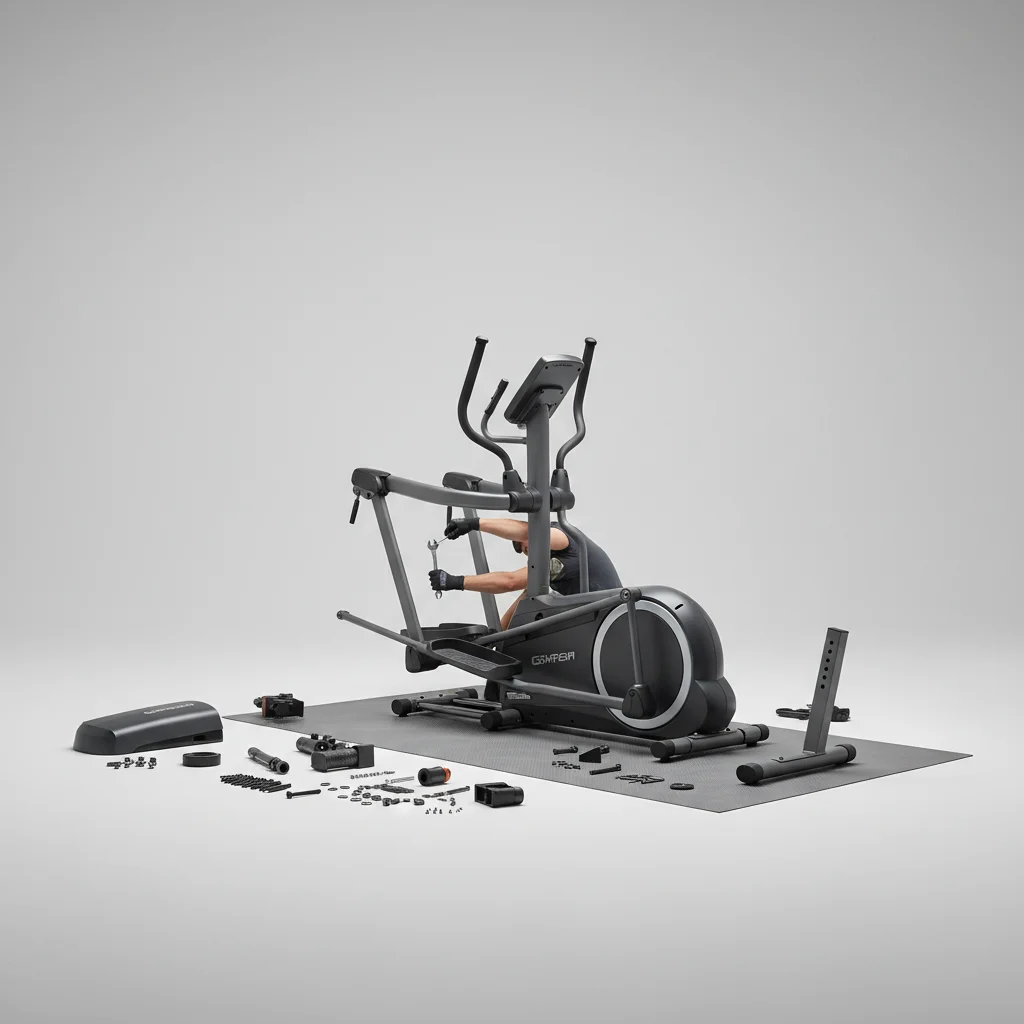
Assembling an elliptical trainer typically requires two people for optimal safety and efficiency, especially when handling heavier components like the main frame and flywheel. While some smaller, lighter models might be manageable by a single person, having an extra set of hands significantly reduces the risk of injury and simplifies the alignment of parts during the setup process.
Why Two People Make Assembly Easier
Many elliptical trainers come with substantial main frames and heavy flywheels that are awkward to lift and position alone. A second person can help stabilize these components while bolts are inserted, preventing accidental drops or misalignment. This collaborative effort speeds up the assembly time and ensures all connections are secure.
Furthermore, attaching the console and handlebars often involves holding them in place while threading wires and securing screws. This can be a delicate operation that benefits greatly from one person holding the part steady while the other focuses on the connections.
Steps Where a Second Person is Most Helpful
- Unpacking and Organizing: While not strictly necessary, having two people can make unpacking large boxes and organizing parts much quicker.
- Attaching the Main Frame to the Base: This is often the heaviest and most critical step, requiring careful alignment and lifting.
- Mounting the Console Post: The console post can be long and unwieldy, making it difficult for one person to hold upright while securing it.
- Connecting Handlebars and Pedals: These parts often need to be held at specific angles while being bolted into place.
- Final Adjustments and Testing: A second person can help observe the machine’s stability and movement during initial testing.
When One Person Might Manage
|
Our Picks for the Best Elliptical Trainer in 2026
As an Amazon Associate I earn from qualifying purchases.
|
||
| Num | Product | Action |
|---|---|---|
| 1 | Under Desk Elliptical Machine, Electric Elliptical as Seen on TV for Seniors Adults with 15 Adjustable Speed, Quiet & Portable Electric Seated Pedal Exerciser with Remote Control & 5 Auto Mode |

|
| 2 | Under Desk Elliptical Machine, Electric Seated Pedal Exerciser, Min Leg Exerciser with Remoter, 12 Level Speeds, Forward & Reverse Direction, Manual & Auto Mode for Home Office |
|
| 3 | JLL Smart Mini Elliptical – Low-Impact Cardio, Quiet Magnetic Resistance (8 Levels), Compact for Home or Office, LCD Display, Bluetooth SunnyFit App Compatible |
|
| 4 | Cubii JR1, Under Desk Elliptical, Under Desk Bike Pedal Exerciser, Seated Elliptical, Work from Home Fitness, Mini Elliptical Machines for Home Use, Cubii Exerciser for Seniors, Desk Exercise |
|
| 5 | Elliptical Exercise Machine for Apartments and Homes,8 Levels of Magnetic Resistance,15.5-inch Stride Elliptical Machine, and Supports Users up to 400 pounds Elliptical Training Machines; |
|
| 6 | Under Desk Elliptical Machine, Electric Elliptical Leg Exerciser While Sitting for Seniors with Upgraded 15 Speeds & 12 Auto Mode, Forward & Reverse Direction, Quiet Portable Seated Pedal Exerciser |
|
| 7 | Under Desk Elliptical Machine, Electric Ellipse Leg Exerciser for Senior, Quiet and Compact Electric Seated Pedal Exerciser for Home with Display Monitor, Remote Control and 12 Adjustable Speeds |
|
| 8 | Under Desk Elliptical Machine, Electric Elliptical Leg Exerciser for Seniors Fully Assembled, Quiet & Portable Electric Seated Pedal Exerciser with Remote Control & 12 Adjustable Speeds |
|
| 9 | Sunny Health & Fitness Cardio Climber Stepping Elliptical Exercise Machine for Home with 8 Levels of Magnetic Resistance, Performance Monitor, Full Body Workout |
|
| 10 | Under Desk Elliptical Machine, Upgraded 6 Adjustable Resistance &15 Speeds Electric Elliptical Leg Exerciser while Sitting for Seniors with Forward & Reverse Direction, Touch Screen and Remote Control |
|
For very compact or lightweight elliptical trainers, particularly those designed for small spaces or with simplified designs, a single person might be able to complete the assembly. These models often feature fewer heavy components and more intuitive, snap-together designs. Always check the manufacturer’s instructions, as they usually specify the recommended number of assemblers.
However, even with lighter models, caution is advised. Lifting and maneuvering parts incorrectly can still lead to strain or damage. If you’re unsure, it’s always better to enlist help.
Tips for a Smooth Assembly Process
Regardless of how many people are involved, preparation is key. Clear a large, open workspace, lay out all tools and parts according to the manual, and read through the entire instruction manual before starting. This will give you a clear overview of the steps and help anticipate any challenges. Double-check all bolts and connections for tightness before using the machine to ensure safety and stability.
