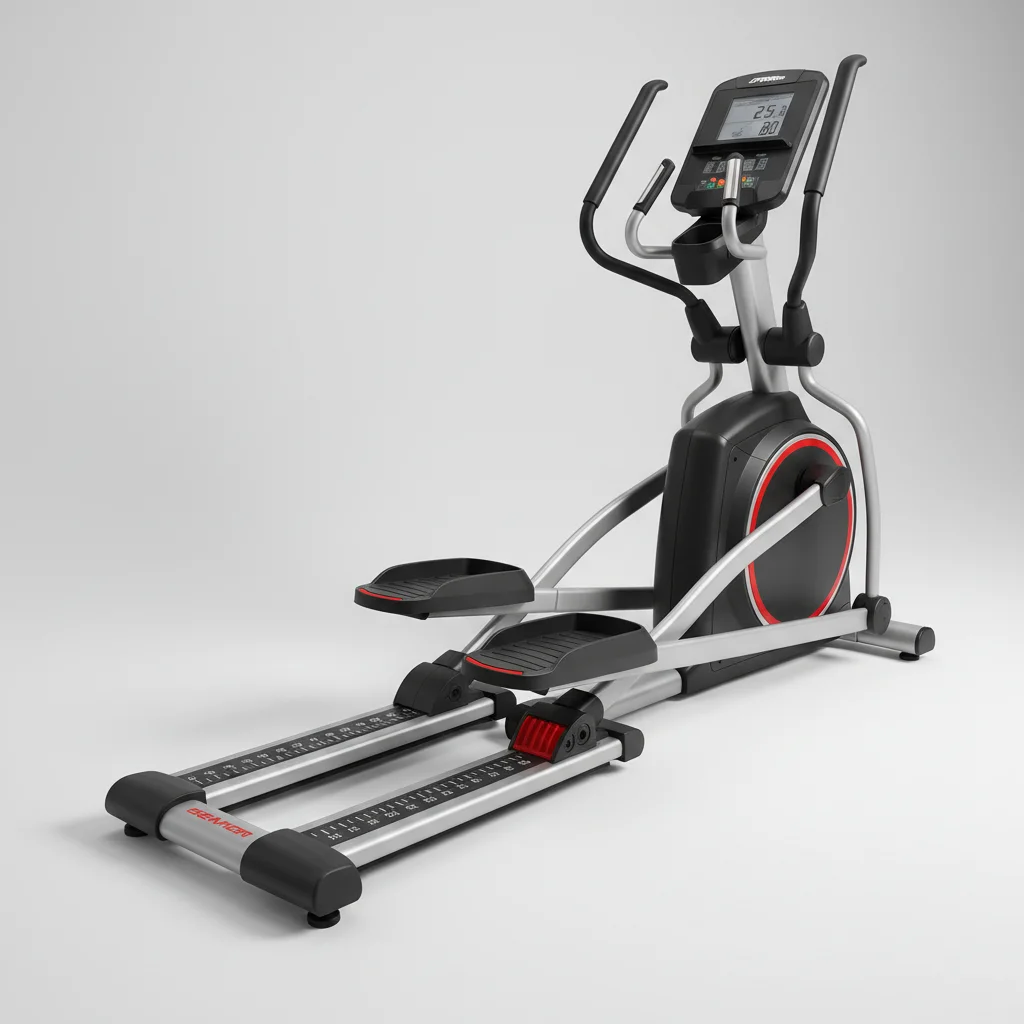
Elliptical trainer stride length significantly impacts your workout effectiveness and comfort, with an ideal range typically falling between 18 to 20 inches for most adults. A stride length that is too short can feel like you’re marching in place, failing to engage larger muscle groups, while one that’s too long might overextend your joints and lead to discomfort. Understanding how this crucial specification affects your exercise can help you choose the right machine for your body and fitness goals.
Understanding Stride Length and Its Importance
Stride length on an elliptical refers to the maximum distance your foot travels forward and backward during one full revolution of the pedals. This measurement is critical because it dictates the natural range of motion your body experiences. A machine with an inadequate stride length can restrict your movement, making the workout feel unnatural and less effective for calorie burning and muscle engagement. Conversely, a well-matched stride length allows for a fluid, comfortable motion that mimics natural running or walking, maximizing the benefits of your exercise session.
For individuals of average height (5’5″ to 6’0″), a stride length of 18-20 inches is generally recommended. Taller users may benefit from longer strides, up to 22 inches, to prevent feeling cramped, while shorter individuals might find a 16-18 inch stride more comfortable. Some advanced elliptical trainers offer adjustable stride lengths, providing versatility for multiple users or for targeting different muscle groups.
How Stride Length Affects Muscle Engagement
The stride length directly influences which muscle groups are primarily activated during your elliptical workout. A longer stride tends to engage more of the glutes and hamstrings, mimicking a running motion. This can lead to a more intense lower-body workout and higher calorie expenditure. Shorter strides, on the other hand, might focus more on the quadriceps and calves, similar to a stair-climbing motion, which can be beneficial for specific muscle targeting or rehabilitation.
Varying your stride length, if your machine allows, can provide a more comprehensive full-body workout. By alternating between shorter and longer strides, you can challenge different muscle fibers and prevent your body from adapting too quickly to a single movement pattern. This adaptability is a key advantage of ellipticals with adjustable stride features, offering a dynamic training experience.
Choosing the Right Stride Length for Your Body
|
Our Picks for the Best Elliptical Trainer in 2026
As an Amazon Associate I earn from qualifying purchases.
|
||
| Num | Product | Action |
|---|---|---|
| 1 | Cubii JR1, Under Desk Elliptical, Under Desk Bike Pedal Exerciser, Seated Elliptical, Work from Home Fitness, Mini Elliptical Machines for Home Use, Cubii Exerciser for Seniors, Desk Exercise |

|
| 2 | Under Desk Elliptical Machine, Electric Elliptical Leg Exerciser While Sitting for Seniors with Upgraded 15 Speeds & 12 Auto Mode, Forward & Reverse Direction, Quiet Portable Seated Pedal Exerciser |
|
| 3 | Under Desk Elliptical Machine, Electric Ellipse Leg Exerciser for Senior, Quiet and Compact Electric Seated Pedal Exerciser for Home with Display Monitor, Remote Control and 12 Adjustable Speeds |
|
| 4 | Under Desk Elliptical Machine, Electric Elliptical as Seen on TV for Seniors Adults with 15 Adjustable Speed, Quiet & Portable Electric Seated Pedal Exerciser with Remote Control & 5 Auto Mode |
|
| 5 | JLL Smart Mini Elliptical – Low-Impact Cardio, Quiet Magnetic Resistance (8 Levels), Compact for Home or Office, LCD Display, Bluetooth SunnyFit App Compatible |
|
| 6 | Under Desk Elliptical Machine, Upgraded 6 Adjustable Resistance &15 Speeds Electric Elliptical Leg Exerciser while Sitting for Seniors with Forward & Reverse Direction, Touch Screen and Remote Control |
|
| 7 | Elliptical Exercise Machine for Apartments and Homes,8 Levels of Magnetic Resistance,15.5-inch Stride Elliptical Machine, and Supports Users up to 400 pounds Elliptical Training Machines; |
|
| 8 | Sunny Health & Fitness Cardio Climber Stepping Elliptical Exercise Machine for Home with 8 Levels of Magnetic Resistance, Performance Monitor, Full Body Workout |
|
| 9 | Under Desk Elliptical Machine, Electric Seated Pedal Exerciser, Min Leg Exerciser with Remoter, 12 Level Speeds, Forward & Reverse Direction, Manual & Auto Mode for Home Office |
|
| 10 | Under Desk Elliptical Machine, Electric Elliptical Leg Exerciser for Seniors Fully Assembled, Quiet & Portable Electric Seated Pedal Exerciser with Remote Control & 12 Adjustable Speeds |
|
Selecting an elliptical with the appropriate stride length is paramount for both comfort and injury prevention. If you’re purchasing an elliptical, it’s highly advisable to test different models if possible. Pay attention to how natural the movement feels and whether you experience any joint strain. A good test is to ensure your heels remain in contact with the pedals throughout the entire stride cycle without feeling like you’re stretching too far or too little.
Consider your height and typical gait. If you have a naturally longer stride when walking or running, you’ll likely prefer an elliptical with a longer stride. Conversely, if you have a shorter natural stride, a machine with a shorter fixed stride length might be more suitable. Always prioritize comfort and a fluid motion over any specific number, as an uncomfortable machine will quickly become unused.
Adjustable Stride Length: Is It Worth It?
Elliptical trainers with adjustable stride lengths offer significant advantages, especially for households with multiple users of varying heights or for individuals who want to diversify their workouts. These machines allow you to change the stride length with the push of a button, providing a customized experience for each user and enabling you to target different muscle groups more effectively. For example, a shorter stride might simulate a stepper, while a longer stride can mimic a jog or run.
- Accommodates multiple users with different heights.
- Allows for varied muscle engagement (quads, glutes, hamstrings).
- Offers greater workout versatility and challenge.
- Can prevent workout plateaus by changing movement patterns.
- Often found on higher-end models for enhanced customization.
While ellipticals with adjustable stride lengths typically come at a higher price point, the added versatility and personalized workout experience can be a worthwhile investment for serious home fitness enthusiasts.These models often include other advanced features, making them a comprehensive solution for diverse fitness needs.
Common Stride Length Misconceptions
One common misconception is that a longer stride length automatically means a better workout. While longer strides can engage more muscles and burn more calories for some, it’s only effective if it matches your natural biomechanics. Forcing an unnaturally long stride can lead to discomfort, joint strain, and even injury, negating any potential benefits. The goal is a smooth, comfortable, and effective movement, not just the longest possible stride.
Another misconception is that all ellipticals within a certain price range will have similar stride lengths. This is not always true, as manufacturers can vary widely in their design specifications. Always check the product specifications for the exact stride length before making a purchase.Reading reviews and trying out machines in person can help clarify these details and ensure you make an informed decision that aligns with your personal fitness requirements.
